Founder Interview
Natalia Bishop
Start with why. Not the product. Not the business model. The why. Why am I doing this? How does it serve my family, my community, the world? That's what gives you the resilience.…
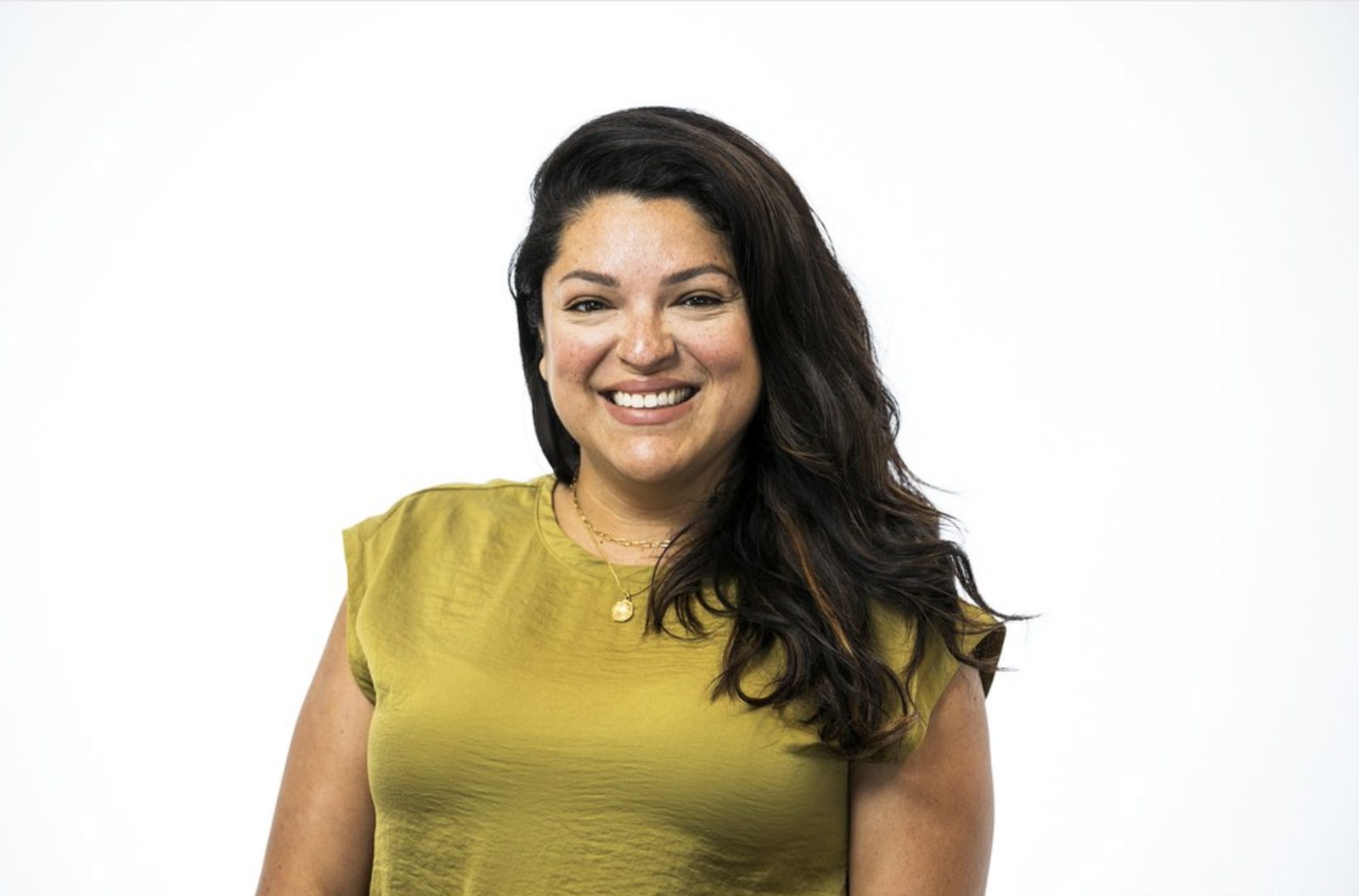
Hey! So nice to speak with you! Can you tell our readers a little bit more about yourself? Where are you originally from and where do you live now?
I'm originally from Barranquilla, Colombia — same city as Shakira and Sofia Vergara, which I mention mostly because it tells you something real about the place and the caliber of humans that live there. It's Caribbean. It's loud and hot and musical and wildly resilient.
I came to Louisville, Kentucky at 17. That was 2001. And I have been here ever since — which surprises people, because they expect me to say Miami or New York. But Louisville is where I built everything. My family, my businesses, my community. It's home.
What's one thing you love about where you live now?
Louisville is a city where you can actually make an impact. Not "someday, if you work your way up to it" impact — real, right now, this matters impact.
I came from Barranquilla — a city of millions, where the ladder is so tall you can't even see who's at the top. Louisville is not that. Louisville is a city where you can actually sit down with the people building things. Here, if you need to sit down with the CEO of a company, you ask. And they say yes. If you need an introduction, someone makes it — not because they want something from you, but because that's just how this city works. The doors are genuinely open.
That's not small. For a founder, especially a founder who doesn't come from money or connections, that access is everything. It's the difference between spinning in place for three years and actually moving.
I built a $13 million building here. I had zero real estate experience. And the people who knew things just... told me. Shared their actual spreadsheets. Made the calls. Louisville does that.
Tell us a little bit more about what your company does and how it started. How does it help your customers?
Wild didn't start as a program. It started as a feeling.
The feeling that the entrepreneurship world — the funding, the accelerators, the rooms where decisions get made — wasn't built for everyone. And that the founders being left out weren't lacking talent or vision or hustle. They were lacking infrastructure. Access. A door that was actually open.
Story–a coworking community in Louisville's NuLu district–came first. Story was built on a simple but maybe radical idea: that where you work shapes who you become. Not just renting desks — building a third space for bold lives. A place where a founder could walk in, feel at home, and find their people. What Story does is create the conditions. We call it a Petri dish. We bring together founders, creatives, investors, movers, shakers and community builders — and then we get out of the way. The magic happens between the people, not because of us. Members within Story's walls have gone on to raise over $20 million in VC funding.
And what kept showing up, over and over, in that space? Undeniable founders — entrepreneurs with real ideas, in a world that kept telling them to wait their turn.
Wild was the answer to that pattern. We believe talent is equally distributed. Access isn't. So we built the infrastructure that was missing.
Today, that vision shows up in three connected pieces that strengthen each other. Wild Academy is our AI-powered entrepreneurship education platform — available globally, right now. Founders don’t just watch videos; they build real assets. Pitch decks, customer research frameworks, messaging strategies — all guided by WILLA, our AI business coach designed to act like the experienced (and often expensive) advisor most founders never get access to. The program includes 48 hands-on workshops across six core modules, built specifically for founders from communities traditional business education has overlooked.
Then there’s Wild Beta — our in-person pre-accelerator for founders with early traction. It’s a 14-week program with real mentors and access to up to $50K in investment. And because we know the barriers are real — childcare, food, transportation — we remove them. All of them.
And the Wild Fund is coming. Because the pipeline we’re building needs capital waiting at the end of it.
So far, we’ve supported more than 100 founders. Our alumni have raised over $500K. Seventy percent identify as women or nonbinary, and 80% are BIPOC. Those aren’t diversity metrics — they’re simply what happens when you design for the people the system has consistently underestimated.
Story is still home base. The physical proof that community-first infrastructure works. Wild Academy is where founders build from anywhere in the world. Story is where they come home.
We're not an online course. We're not a coworking space. We're the ecosystem that should have existed a long time ago. We just decided to build it.
If someone wants to start a business, what advice will help them?
Start with why. Not the product. Not the business model. The why. Why am I doing this? How does it serve my family, my community, the world? That's what gives you the resilience. The grind alone won't do it.
And then — don't wait until you have the whole map. Ask yourself: what's my next right step? You eat the elephant one bite at a time. The road begins to magically meet you when you take that next step.
Also, build non-transactional relationships. I don't mean networking. I mean actually seeing people. 'I see you and you see me and now we care about each other.' The opportunity that changed Story's trajectory came through a relationship I built over three years with no agenda. That's how it works.
One more thing: you don't have to wait until you've made it to help someone else. Build the bridge right behind you. You can build what you're building and reach back at the same time.
What's one piece of feedback from a happy customer or client that you won't forget?
I’m constantly moved to tears when people tell me how being at Story has changed their lives, whether it is battling isolation and finally feeling like they are part of something, or a founder who gave a pitch in one of our Wild programs and has now raised funding, signed a big customer, or gotten into an accelerator. That’s the stuff that keeps you going when things get tough!
Where do you see your company in the future?
People always assume the answer is "Story goes national." Like, we find a city, we sign a lease, we put our name on a door. That's not the play.
Wild Academy goes everywhere first — and Story follows the people.
Wild Academy is already virtual. Already global. A founder in Atlanta or Detroit or Bogotá can log in tonight, meet WILLA, and start building. That's the beachhead. Wild Academy finds where the undeniable founders are gathering, and Story shows up in their neighborhood to meet them there.
Our Louisville facility is not the origin story. It's the proof of concept. What we learned here is that when you build a space that actually centers belonging — not a diversity slide deck, real belonging — people build better businesses.
Picture this: a Wild Academy cohort wraps up in Nashville — fifteen founders, building together for months, ready to collaborate in person. That’s why Story opens in East Nashville — not a generic coworking space, but a neighborhood rooted in those founders, that block, that community. Wild Beta runs from here. Local mentors plug in. The Wild Fund invests in the founders coming out of it. The ecosystem is the same, but it looks, sounds, and feels like Nashville.
Detroit. Denver. Miami. Charlotte. Bogotá. Anywhere a community of undeniable founders has been waiting for infrastructure that was actually built for them.
WeWork, Regus, and Industrious scaled square footage. We scale belonging. You can't franchise belonging — but you can build the conditions for it, over and over. That's the future.
What is the biggest misconception about your industry?
That entrepreneurship is about the hustle. That the grind is the point.
It's not. The grind is just the vehicle. The point is the why behind it — the people it serves, the community it builds, the thing it changes. When you mistake the hustle for the purpose, you end up burning out for something you can't even name anymore.
What has been one of your biggest struggles building your business and how did you deal with it?
Fundraising for Level Up — the edtech platform I launched with my cofounder Hannah Estes in 2018 — was the toughest stretch of my career. We’d bootstrapped our way to over $250K in revenue and thousands of learners worldwide, right in the middle of the pandemic. I had more than 387 conversations with investors. We secured roughly $1.25 million in commitments — and then the lead investor pulled out at the last minute. Domino effect: the whole round collapsed, and we were left with just six weeks of runway.
I want to be clear about something: only 58 Latinx women had ever raised over $1 million in venture capital as of 2020. The math was already against me in ways that had nothing to do with the product. That's not a complaint — it's just the truth.
What I eventually chose was to stop. Not to fail — to stop. There's a difference. I was leaving my family behind. I was leaving myself behind. And I decided that was not a trade I was willing to make. The hardest thing I've ever done in business wasn't the rejection. It was choosing the stop. Because our culture treats stopping as failure. It's not. Sometimes the most courageous thing is knowing when you're done.
What was your favorite music artist and athlete growing up?
The Backstreet Boys. Full stop. I was approximately 13 or 14 years old and I was obsessed. I founded the first Backstreet Boys fan club in all of Barranquilla — approximately 200 members.
I learned English by playing cassette tapes slowly and decoding the lyrics word by word. Nick Carter was my favorite. And when my family decided to move to Kentucky, I thought it was a sign — because some of the Backstreet Boys are from Kentucky. I have absolutely no shame about any of this.
I was never big into sports growing up, but fun fact, I inadvertently got to sit next to Andre Agassi and his wife (Steffi Graf) on a Southwest Airlines flight and they were the kindest humans, talked to me about their kitchen remodel and kids, and I didn’t even realize who they were until we got off the plane and people started asking them for their autographs!
Any shoutouts you want to make?
My husband Steve, we’ve worked so hard as a couple to be able to communicate better in this founder journey, he is steady and loyal and a true friend, someone I can come to with hard decisions and he supports me in every way. It wasn’t always easy but we learn from each other and come closer every day.
My mom — always. She worked side hustles her entire life while raising three kids on her own. She cashed in her 401k so I could do an IKEA run and open a co-working space in a weird second-floor building near a pig processing plant. She didn’t have to see the vision or make sense, she just supported me. That's love.
The Story & Wild Accelerator team and Board, none of what we do would be possible without these amazing humans pouring their love and care into what they do day in and day out. They believe in the mission and our culture, and show up for each other and our community. I'm really lucky to have them as my coworkers and friends.
Where can our readers follow your work or learn more about your upcoming projects?
@wildaccelerator, @natalia_bishop, @storylouisville and www.wildaccelerator.org.