Founder Interview
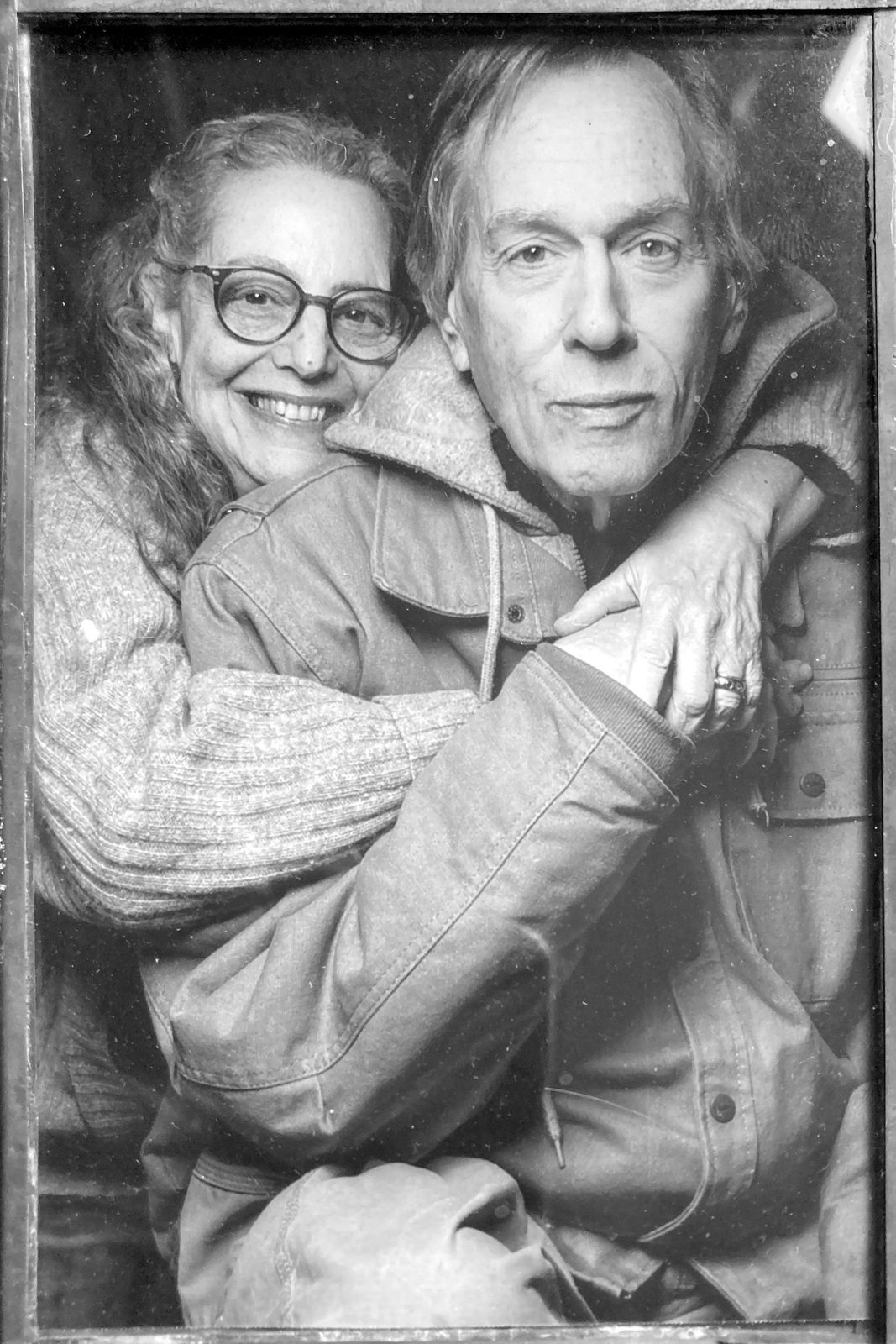
Richard Rabinowitz and Jill Enfield
If you believe your plan is possible, let it consume you. Make it happen, despite whatever obstacles appear.
So nice to meet you! First off, what’s your name? Tell our readers a bit about yourself: where you’re from originally and where you live now.
My name is Richard Rabinowitz. My wife, renowned photographer Jill Enfield, and I were both born in the 1950s in Miami Beach, Florida. This, perhaps, is relevant to what became our life’s work when we entered adulthood. Photography, ironically, was quite relevant to the careers we both chose.
Jill’s father’s family had been prominent members of the photography business in and around Frankfurt, Germany, since the 1800s. They were all forced to leave Nazi Germany during World War II, but luckily were helped by Ernst Leitz, who founded the Leica camera company. Jill’s grandfather, Henry Ehrenfeld, was in the concentration camp Buchenwald, and written records show he was scheduled to be sent to the gas chamber. One week before that date, the Leitz company helped organize a camera store in Miami Beach. The store, owned by Jill’s family, was launched as Enfield Cameras on Lincoln Road in 1939, the same year the family arrived in America and settled in Miami Beach. The Enfields, formerly known as Ehrenfeld, were told to change their names to sound more American.
Fifteen years later, Jill was born. She went on to become a world-renowned photographer. She has been the subject of two documentaries and three books, and her work is included in fine art museums and private collections. For the last 50 years, she has also been teaching workshops around the world, including in Taiwan, Norway, countries across South America, and countries throughout Africa.
This past summer, Jill was invited back to Germany for a commemorative event honoring Jewish families who were forced to leave during the Nazi era. Several properties once owned by her family received engraved markers recognizing their lives, businesses, and contributions to the community before their displacement. These engravings are part of a much larger memorial effort, with thousands of markers dedicated to others who were similarly forced from their homes.
Jill and I were casual friends as teens, parted ways, and then got back together in college. We have been married for 48 years, since 1978.
Coincidentally, when Jill wanted to relocate to New York City, I became vice president/group publisher of several magazines, including Popular Photography and American Photo. They were unrivaled in their day, though they are no longer in print now that the digital age has overtaken much of the print world. It was a perfect fit for my career, since Jill was already rooted in every aspect of photography.
My role with the magazines eventually expanded into television shows and workshops around the world, helping viewers pursue their passion for photography.
I founded Digital Photo Academy in New York City in 2006. It began with live workshops in 24 North American cities and now includes online classes. Most recently, we launched a YouTube interview series called Celebrating Senior Shutterbug Champions under the moniker Digital Photo Academy. In each episode, we speak with accomplished photographers in their 70s, 80s, and 90s, who share their images and stories from some of the most significant cultural and historical events of the last century.
We eventually moved to the Hudson Valley of New York, and I continue to run the business from here today, along with a number of Gen Z individuals who understand contemporary technology. I could not survive without these people regularly leading the way through what is, for me, an intimidating process.
What's one thing you love about where you live now?
We live in the Hudson Valley of New York State in a home built in 1828. The house is on the National Historic Register and was originally built as the headquarters for the Orange Mill gunpowder complex.
The mill itself dates back to the 1700s and was first used to produce chalk and then lumber. In 1816, local businessman Asa Taylor bought the mill, along with more than 300 acres of surrounding land, and converted it into a gunpowder mill.
By the 1820s, the operation had grown enough that the Orange Mill officials built a two-story headquarters beside the mill. That headquarters is the house Jill and I live in today. The building included a testing laboratory in the large round front room, offices upstairs, a carpenter’s shop in the rear, and a testing range behind the building.
At first, the gunpowder was used for local needs, like clearing land, removing tree stumps, and building roads. As the business expanded, the mill began producing high-quality cannon and rifle powder. In 1859, the Smith and Rand Powder Company, a subsidiary of the DuPont Corporation, bought the mill and increased production, selling over 200,000 tons of gunpowder during the Civil War.
The property changed hands several times, and around 1901, the old headquarters was remodeled into a residence. In 1909, Colonel Frederic Delano, uncle of future President Franklin D. Roosevelt, purchased the property and preserved both the mill and the surrounding land. It is possible that Theodore Roosevelt (Delano’s distant cousin, eventual president, and vocal opponent of large monopolies) may have played a role in facilitating the sale of the mill to the colonel. After Sarah Delano Roosevelt, FDR’s mother, inherited it, she donated the property to the city of Newburgh as a historic park.
Jill and I moved here in 2014, and we now run our separate businesses on the same property where we live. The house, surrounded by 90-foot trees, feels as if it is in the middle of a forest. I love living inside a place with this much history.
Tell us a little bit more about what your company does and how it started. How does it help your customers?
Digital Photo Academy grew out of my years in magazine publishing. At the time, a major photography company was looking for a competitive edge. They wanted to reach the hundreds of thousands of photo enthusiasts who read our magazines and show them that well-known photographers were displayed using that sponsoring company’s equipment.
We built a workshop program around that idea. In every issue, we announced photography workshops across the United States and around the world. Hobbyists could pay to attend and learn from hero photographers they admired, with hotel and airfare arranged as part of the program.
The workshops themselves might have had 100 or more paying attendees, but the bigger value was the exposure in the magazines. Hundreds of thousands of readers would see what photo equipment their heroes were using. That was the real selling point for that photography company.
Soon after, another corporation offered to finance a version of this workshop program in 24 North American cities. That offer would allow me to open my own business if I left the publishing company where I had worked for about 25 years.
The corporation’s goal was to help camera stores understand why they should carry its product line, which had been having trouble getting into those markets. We contacted respected local photographers in each city and hired them to teach workshops using the sponsoring company’s product line.
At that point, I was in my late 40s and had recently gone through quadruple bypass surgery. That made me think seriously about what I wanted to do next. I decided to leave the corporate world and start my own company.
With the help of accomplished local photographers and photo retailers, before long, photo retailers agreed to carry the sponsoring company’s product line. That was the beginning of Digital Photo Academy.
Digital Photo Academy officially launched in 2006 with a simple mission: to help people get more out of their cameras with guidance from inspiring, knowledgeable professional instructors.
Today, we offer monthly, in-person, small-group workshops in 24 cities across North America, along with private and online classes.
We recently launched a YouTube interview series called Celebrating Senior Shutterbug Champions under the moniker Digital Photo Academy. In each episode, we speak with accomplished photographers in their 70s, 80s, and 90s, who share their images and stories from some of the most significant cultural and historical events of the last century. The series is designed to highlight the value of older generations and the wisdom they have gained through experience. By reflecting on the past—both its triumphs and its failures—we can better understand the present and prepare for the future.
Our students are photo enthusiasts of all levels, including beginners. Many have recently bought a camera that feels difficult to use. Others are preparing for a trip or family event and want to capture the best possible photos. Some simply enjoy getting together with others to take pictures and socialize.
Our classes can teach you how to use both the automatic and manual settings on a camera or cellphone, apply simple yet effective composition techniques, enhance your images through post-processing and editing, and much more.
In our Master Your Camera Controls sessions, a maximum of five students sit down with an instructor for 90 minutes. The instructor guides each person through the automatic and manual settings on their specific camera or cellphone. We keep the groups small because every student brings different equipment with different controls.
After registering, students receive an email asking for the exact make and model of their camera or phone. We often need to follow up, since this email is often ignored, but providing that information is essential. It allows the instructor to prepare in advance and point out each device’s specific features. The goal is to help students move beyond automatic settings so they can make more intentional creative choices.
In Composition in the Field, students go out into photogenic locations and practice taking photos with an instructor by their side. They learn specific composition strategies as the instructor demonstrates, supervises, and gives feedback. Each student walks away understanding the visual dynamics and storytelling results of a variety of composition strategies. (These strategies include leading lines, the rule of thirds, negative space, and more).
Our locations rotate monthly across the 24 cities where we teach. They may include vibrant street scenes, striking interiors, farmers markets, zoos, landscapes, wildlife, flower gardens, architecture, and more.
Our instructors are active photographers who live where they teach. They know the best local spots, sometimes with exclusive access to locations, and bring both photography and teaching experience to each class.
We also offer corporate photography workshops, often held during sales meetings, retreats, or other events where regional teams gather in one location. In these workshops, we train employees to capture high-quality photos of customers, product displays, and field activities. Once they return to their territories, participants can submit these images to headquarters for use on the company’s website, social media channels, and other marketing materials.
If someone wants to start a business, what advice would help them?
If you believe your plan is possible, let it consume you. Make it happen, despite whatever obstacles appear.
Where do you see your company in the future?
For more than 50 years, Jill and I have gotten to know many photographers who are now in their 70s, 80s, and 90s. We have launched an interview series on YouTube called Celebrating Senior Shutterbugs, where these photographers can show their pictures and tell their stories.
The series is not just a look back at the past. It is also a reminder that senior photographers have seen and documented important events that can still teach us valuable lessons today. Some of those events made the public proud, while others made the public feel ashamed. Their stories show that history often repeats itself, even when the circumstances are different.
By celebrating these senior photographers, we give them a chance to leave a lasting legacy. It also reminds us that getting older does not make someone less important or less relevant. In fact, their years of experience often give them a unique perspective that can help the rest of us better understand the past, make sense of the present, and think about the future.
For example, Pulitzer Prize-winning photographer David Hume Kennerly shared his harrowing experience covering the Jonestown tragedy in Guyana in 1978, where more than 900 people died in a cult mass murder-suicide.
His story was a reminder that, while history does not repeat itself exactly, many of the same human struggles continue to surface in different ways. The horror of Jonestown may seem distant, yet society still grapples with shocking acts of violence and loss, from school shootings to other tragedies that regularly dominate the headlines. Listening to those who documented such events firsthand can help us better understand both the past and the challenges we continue to face today.
Our hope at Digital Photo Academy is to grow the YouTube series and eventually develop it into a documentary and/or podcast series. We hope to continue the interviews, grow our YouTube following, and potentially branch out with Celebrating Senior Shutterbugs as a nonprofit.
What's one piece of feedback from a happy customer or client that you won't forget?
It is hard to choose one specific piece of feedback after so many years in business. On our website, you can find more than 1,200 testimonials from past students.
However, one that has stayed with me came from Cherie Dean, a member of our Celebrating Senior Shutterbugs Facebook group. She posted a portrait photo with the caption:
“My 1st post here. I am having to re-learn photography after brain cancer and feel a bit discouraged seeing all the amazing work on here. But, here goes! Please be kind!”
That message moved us. After overcoming brain cancer, Cherie was re-learning photography, which takes tremendous courage, patience, and dedication.
We were joyful that it received over 900 responses from other followers. To me, her post shows that photography can be more than an art form. It can be a way to reconnect with yourself, connect with others, and rediscover joy. Many of our members have found a sense of belonging through Celebrating Senior Shutterbugs, dealing with what can sometimes be a lonely chapter of life by creating a welcoming and supportive community.
In a couple of years, the group has grown to 41,000 passionate followers and gains about 1,000 every month. We are thrilled to see that community grow as people share their work, encourage one another, and connect in a genuine way.
What is the biggest misconception about your industry?
The biggest misconception is that great photography requires great equipment. What matters most is the inner soul of the photographer. A skilled photographer can create great images with almost any camera.
It is also a misconception that people with limited experience cannot rise to the occasion. They can. With enough drive and commitment, any team can learn what they need to know to get a job done. That is 100% true of the core group that has made us a success.
That belief is reflected in our motley crew of more than 50 professional instructors across 24 cities, along with the people who support them at headquarters, including Ryan Keegan, Jonathan Martine, Brian Diescher, Stephen Darling, and many others.
There is real joy in working with such a diverse group. Everyone brings something different to the table. There is plenty of laughter, and, yes, plenty of bickering too.
What has been one of your biggest struggles building your business, and how did you deal with it?
One of the biggest struggles has been the widespread shift toward remote work. Something is lost in nuance, energy, and inspiration when people are not in the same room, inspiring each other.
How did I deal with it? I just kept going.
Who was your favorite music artist and athlete growing up?
My favorite music artist was Joan Baez, especially the song “Hello in There.” It asks people to pay attention to lonely older adults, and that meaning speaks to me.
As for an athlete, I would say Forrest Gump. He was fictional, but he was an inspiration to all. I was never very invested in team sports.
Any shoutouts you want to make?
I would love to give a shoutout to Michael Hart, who has taught for us in Houston and recently rejoined to help us out again. Michael has had a long and impressive career as a commercial photographer, traveling the world for corporate, design, and advertising assignments, while also creating award-winning personal work. He brings a deep understanding of composition, light, and design, and we are grateful to have him connected with Digital Photo Academy. We will be launching an online series of lectures led by Michael soon.
I also want to thank Brian Diescher, Jonathan Martine, and Stephen Darling, who have helped a great deal with our Celebrating Senior Shutterbugs interviews. There is a lot of hard work that goes into interviewing, video editing, posting, and keeping the series moving, and I am very proud of what they have helped build.
These are the people who help keep everything moving, and I am very grateful for them.
Where can our readers learn more about you and your company?
Celebrating Senior Shutterbugs Facebook group: https://www.facebook.com/groups/999313021058041
Digital Photo Academy Community Facebook group: https://www.facebook.com/groups/650333775315623