Founder Interview
Ardimus Caldwell Jr.
I say start by solving a problem. Start by looking at the people around you. It could be a friend, family member, partner, coworker, or even yourself. Find a problem you can…
So nice to meet you! First off, what’s your name? Tell our readers a bit about yourself—where you’re from originally and where you live now.
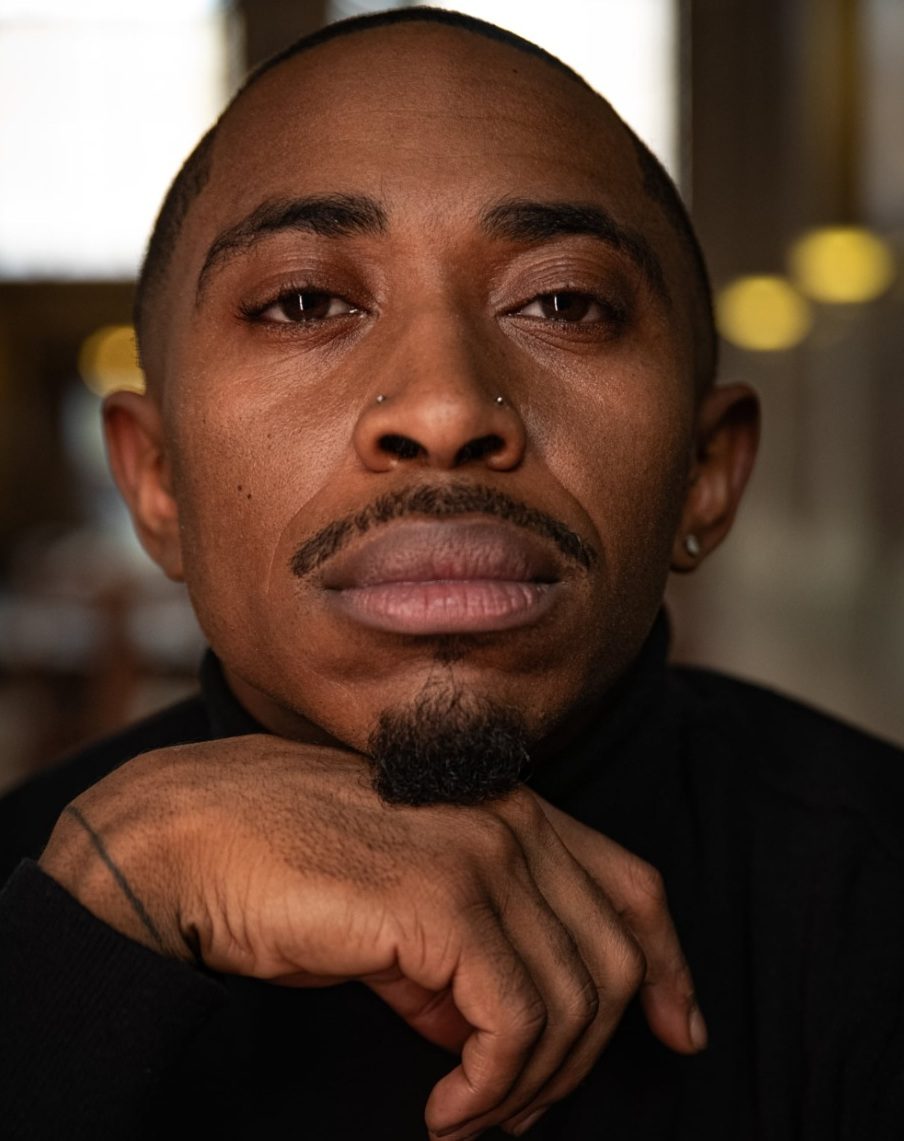
Hi, I'm Ardimus Caldwell Jr., also known as Whois Ardimus.
I'm a poet, educator, community organizer, and creative entrepreneur from St. Louis, Missouri. Much of my work revolves around my curiosity about people: Who do we become? Who are we? Why do we do the things we do? And who do we have the potential to become?
Poetry was my first exploration of those questions, but eventually, it became much bigger than just writing poems. It became a way of thinking, a way of communicating, and a philosophical endeavor. That way of thinking eventually became the foundation for Whois, an organization dedicated to understanding identity, unity, personal development, and character building within the community. Helping people understand that becoming better doesn't have to be something we do alone.
Tell us one thing you love about where you live now.
One of the things I love most about St. Louis is how much of my story is connected to this city. There's a local roller-skating rink called Skate King that I grew up going to. My father would take my little brother and me almost every weekend, and sometimes we'd attend skating festivals that came into the city. That's where I experienced love, heartbreak, and friendship, and met new faces who eventually became family.
It was also where I found spoken word—or should I say, spoken word found me. A promoter was looking for different kinds of talent and originally booked me to skate. That opportunity led me to discover open mics around St. Louis and eventually made poetry a serious part of my life. When I think about St. Louis, I don't just think of it as a place. I think of it as a hub for some of my fondest memories. I owe a lot to my city for the man I am today.
Tell us a little more about what your company does and how it started. How does it help your customers?
Whois started in 2014 as a conversation between friends in college. I was interested in identity, unity, and what makes people who they are. Eventually, I took that conversation to a barbershop, where I began experimenting with entrepreneurship.
The idea behind our original slogan, “The change in your pocket could change the world,” actually started with 15 cents. There was another barber who had a reputation for being a hard person to get anything from, and I wanted to see if I could get him to donate just 15 cents to the cause. It wasn't much, but my thinking was that if I could get him to contribute, then I had something I could build on. That small challenge became a bigger idea about how even the smallest contributions can make a difference when people come together.
From there, Whois evolved into an organization dedicated to identity and unity within the community through effective goal setting, personal development, and character building. We encourage people to be more intentional with their decisions, practice selflessness, and understand how their choices can affect themselves and the people around them, both positively and negatively.
At the core of Whois is the Code of Harmony, a guided 15-day program designed to help participants prioritize their goals and identify the steps needed to accomplish them. Participants set goals across four timeframes: 12 days, one month, six months, and one year. The purpose is to take goals and accomplishments that might otherwise take a year to work toward and break them down into manageable, intentional steps.
The first 12 days focus on effective goal setting, personal development, and character building, with each day having a specific dedication or focus word. The final three days are dedicated to reflection. Through workshops corresponding with each day, participants identify what they want, prioritize their actions, and reflect on their progress.
My mission was never to change a person. It was to meet people where they are and help them work through the question, “How do I become better?” I believe our circumstances don't always define us, but we have to be willing to take responsibility for our decisions and recognize that we can't do everything alone.
That same philosophy has grown into other projects. Poetry gives me a way to explore identity, perspective, and the human experience. Pen Up or Shut Up Battle Poetry gives artists a platform to showcase their work, develop their artistry, and compete against one another. Meanwhile, the Who's Talk podcast creates space for conversations about people, life, culture, society, and ideas. Each project serves a different purpose, but together they form an ecosystem built around a shared belief: when we understand ourselves and each other better, we put ourselves in a better position to grow together.
Ultimately, Whois is about helping people recognize that they have a role to play in their own development and in the communities around them. Sometimes change starts with a major decision, and sometimes it starts with something as small as 15 cents. What matters is what we're willing to build with what we have.
Over time, our slogan has evolved into “The Beginning of Change Starting with Yourself.” To me, that reflects the heart of Whois: meaningful change begins with the individual, but its impact can reach far beyond them.
If someone wants to start a business, what advice would you give them?
I say start by solving a problem. Start by looking at the people around you. It could be a friend, family member, partner, coworker, or even yourself. Find a problem you can genuinely help solve, and if you care about solving it, then you've got somewhere to start.
But also know what you're doing it for and who you're doing it for, because entrepreneurship will challenge you. There will be moments when you question yourself, wonder whether people will support you, or ask yourself whether you should keep going.
When those days come, remember that tough times never last, but tough people do.
Being an entrepreneur also means realizing that your original idea might not be the final result. You have to be willing to evolve and remain flexible about how you reach your desired reality without losing sight of the reason you started.
What is one piece of feedback from a happy customer or client that you won't forget?
One client who stands out to me is a young woman I worked with early in the development of Whois. She was part of one of the first groups to go through the Code of Harmony. As a result, she began thinking more critically about her decisions, where she was putting her energy, and what she wanted to accomplish in the future.
I remember that one of her goals was to become a nail technician. Over time, she began recognizing the possibility of building her own business and taking the steps necessary to make it happen.
What stayed with me wasn't just the idea of her starting a business, which she did! It was seeing her begin to look at her circumstances and possibilities differently and watching the workshop start to click for her.
That was special to me because it showed how the work could translate into someone's life beyond the workshop itself. Seeing her recognize a goal and begin taking steps toward it was a meaningful reminder of why I started Whois.
I believe people often have more potential than their current circumstances allow them to see. If something we've created can help someone recognize that potential and take steps toward the life they want, then I believe we're doing something meaningful.
Where do you see your company in the future?
I see Whois becoming a recognizable global brand centered around identity, personal development, unity, and helping people become better versions of themselves.
I don't necessarily see it as one thing. I see it as an ecosystem, with each part serving a different purpose.
The Code of Harmony will continue to be an extension of the brand's philosophy. Poetry will remain a way of expressing the message. I see Pen Up or Shut Up Battle Poetry at the forefront of underground poetry battles, giving artists a platform to develop their skills, an opportunity to further their careers, and a chance to compete on a global scale. I also see the Who's Talk podcast developing into a media network dedicated to helping artists further their careers while creating space for conversations about culture, people, and ideas.
The world keeps changing, so the way we deliver the message has to change with it.
Sometimes it needs to be a poem. Sometimes it needs to be a conversation. Sometimes it needs to be a competition. Sometimes it needs to be a program that helps someone accomplish a goal. That's part of what evolution means to me.
In the end, I see Whois becoming a brand that people recognize and associate with self-empowerment, personal growth, and self-help.
What is the biggest misconception about your industry?
I think one misconception is that helping people is simple, or that one method is going to work for everybody. People are complicated. We all have different experiences, personalities, challenges, and perspectives. What works for one person may not work for somebody else.
That's something we have to understand when working in personal development. You may have a program or a philosophy about how things should be done, but at the end of the day, you still have to recognize the person in front of you.
I also think there's a difference between wanting to help everybody and understanding how you can actually help. Wanting to make a difference doesn't mean you can or have to solve every problem in humanity.
For me, the goal isn't to force people into a particular version of who they should be. It's to help them become more intentional about who they are, the decisions they make, and the direction they're going.
You have to meet people where they are without pretending you know everything about where they need to go.
What has been one of your biggest struggles building your business, and how did you deal with it?
One of my biggest struggles has been trying to build something before I completely understood what I was building.
There was the fear of failure, doubt, and second-guessing every decision. I was trying to figure out how to find clients, wondering whether people would actually support me, and questioning whether I was making the right choices. Sometimes, being the first or going at it alone is scary.
There were times when I lost sight of the original vision because I was so focused on trying to make something work. I was trying to force something that hadn't fully come into existence yet. I had to learn that evolving doesn't mean abandoning the vision.
Sometimes you have to look at it as starting from scratch without actually starting over. The original version may not be enough for where you're trying to go, and that's exactly what happened with Whois.
It started as a conversation, then grew into collecting change, clothing, poetry, Pen Up or Shut Up Battle Poetry, and eventually Who's Talk. Each stage introduced a new way to develop the original idea. Pen Up became a platform for artists and poets to sharpen their skills, while Who's Talk expanded the conversation beyond poetry and performances to explore people's experiences and perspectives on the world around them.
The vision is still there, but the vehicle keeps changing, and that's okay. I think that's one of the biggest lessons entrepreneurship has taught me.
Who was your favorite music artist and athlete growing up?
Growing up, my favorite music artist was Tupac. I found him incredibly inspirational because he wasn't afraid to talk about contradictions. He could explore love, anger, poverty, politics, violence, hope, and ambition all within his body of work.
That had a big influence on me.
In fact, Whois originally started under the name Outlaw as a dedication to Tupac. As I developed the idea and began to understand myself better, the organization evolved with me, eventually becoming Whois.
My favorite athlete was Marshall Faulk. Growing up, I played football as a running back, so naturally, I gravitated toward him. He also visited my middle school, which made the connection a little more personal.
I think both of them influenced me in different ways. Tupac showed me the power of using your voice to explore ideas and challenge people. Marshall Faulk showed me what it looked like to develop a skill, perform at a high level, and give back.
Both of those lessons stayed with me longer than I expected.
Any shoutouts you want to make?
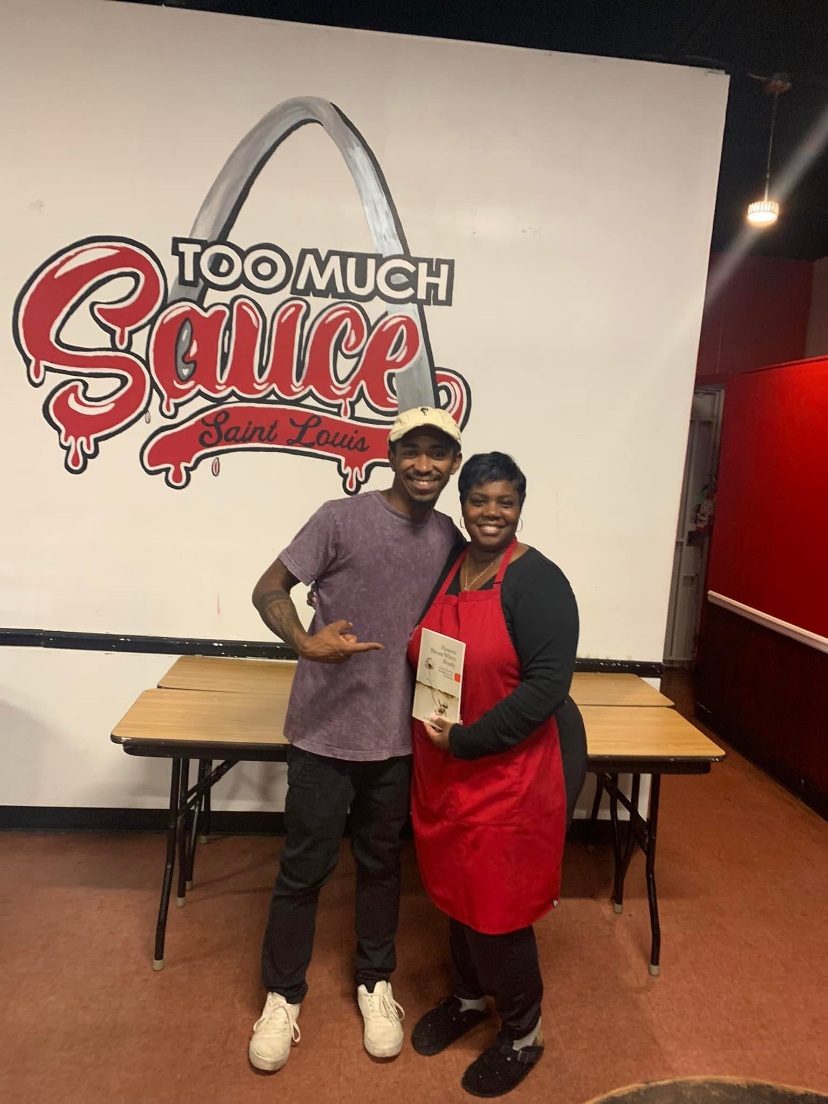
My dad Ronnell Hudson, my little brother Emanuel Hudson, Tatiyanna Ivy and Eve Bell; and the organizations Too Much Sauce St. Louis, T&T Platinum, Voyage STL Magazine and Lift for Life Academy High School.
Where can our readers learn more about you and your company?