Founder Interview
Maanvik Uppal
My biggest piece of advice is simple: stop waiting until you feel "ready," and start building with what you have right now.
So nice to meet you! First off, what’s your name? Tell our readers a bit about yourself—where you’re from originally and where you live now.
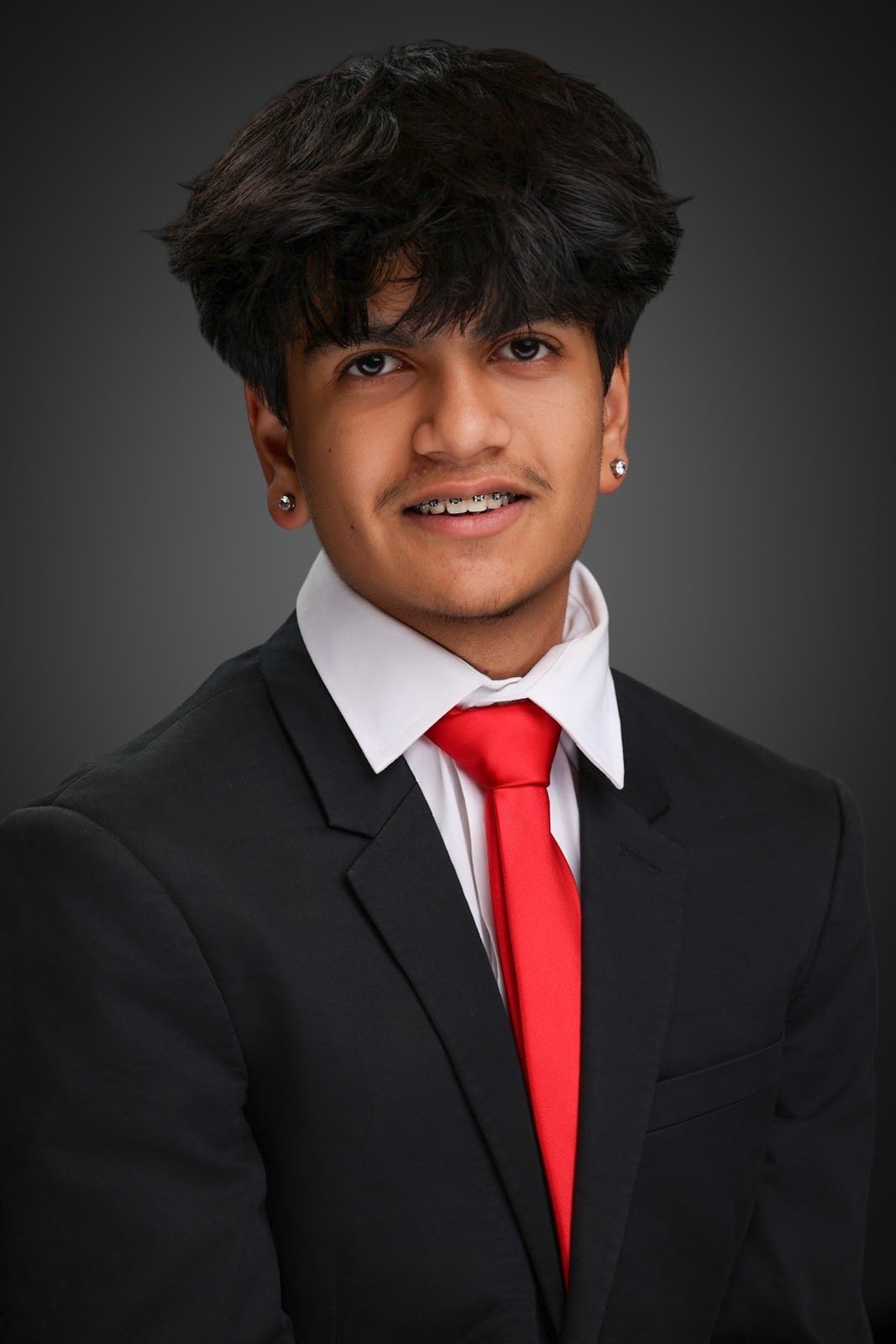
Hello everybody! My name is Maanvik Uppal, and I am a 17-year-old founder, researcher, and dual-enrolled student at Wake Early College of Health and Sciences and Wake Technical Community College.
I was originally born in India and moved to the United States when I was five years old. My family arrived with very little, and watching my parents work day and night to build a life for us taught me early on what real hustle and resilience look like. Today, I live in Holly Springs, North Carolina, right in the heart of the Research Triangle.
My love for building things started when I was a kid with a Lego set my mom bought me, and over time that curiosity grew into medicine, artificial intelligence, and community service. Outside of running AI projects and nonprofits, you can usually find me on the soccer field, tinkering with electronics, or volunteering in the emergency department and operating rooms at local hospitals like UNC Rex and WakeMed. I truly believe you do not have to wait until you are older or have a fancy title to start solving problems that matter.
Tell us one thing you love about where you live now.
What I love most about living in Holly Springs and the greater Triangle area is the collaborative spirit and the balance between innovation and nature.
One minute, you can be surrounded by world-class universities, research labs, and people who are genuinely eager to mentor young builders. The next minute, you can step onto quiet greenways and local streams to clear your head. People here actually want to see young creators and entrepreneurs win, whether you are working in healthcare, tech, or community service. Having that kind of supportive community right in my backyard makes it an amazing place to grow and launch new ideas.
Tell us a little more about what your company does and how it started. How does it help your customers?
For me, everything I build comes down to one mission: using technology and community action to protect human lives. Right now, I lead two AI ventures alongside a youth-led nonprofit.
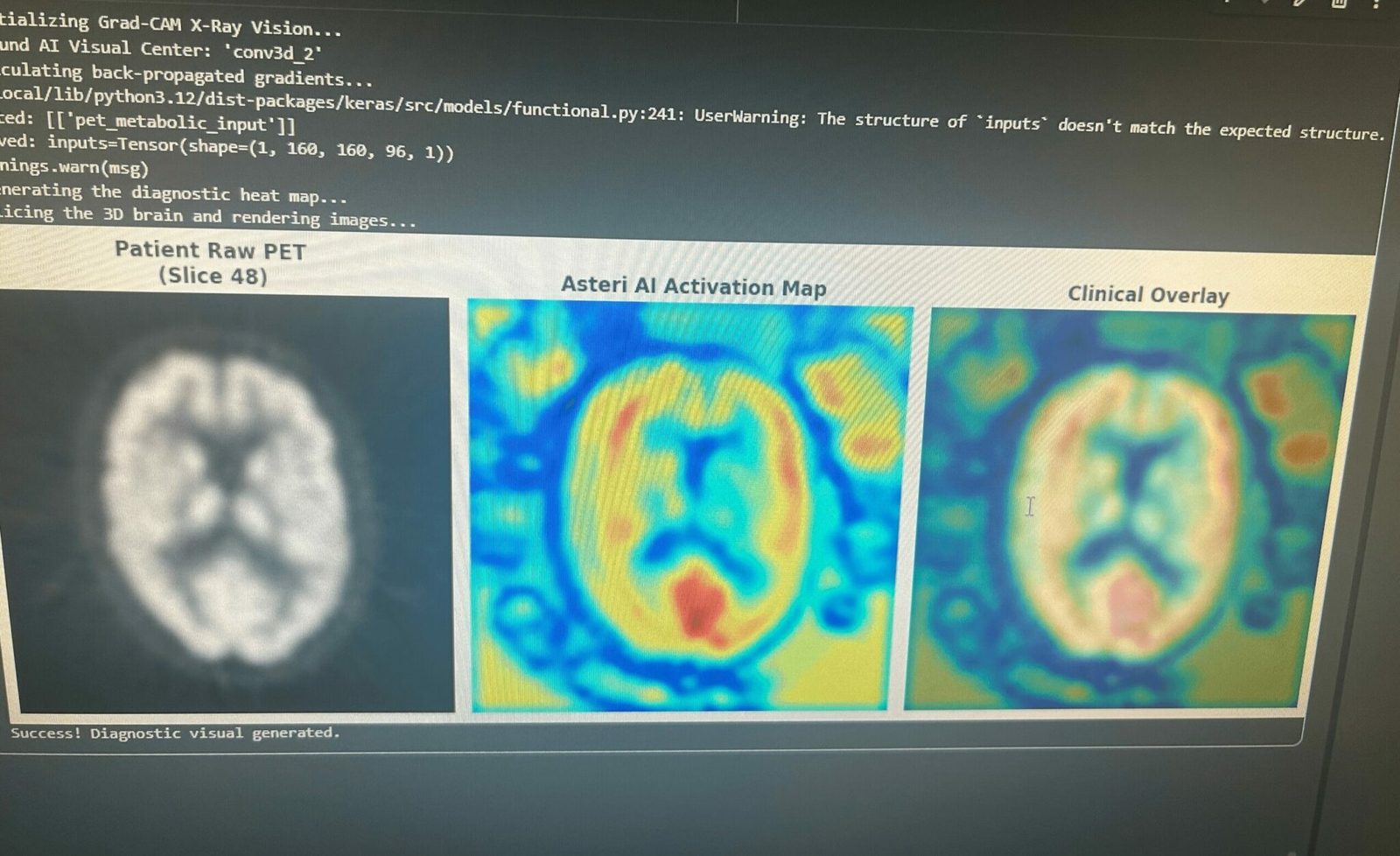
The most personal one to me is Asteri-NeuroAI. My grandpa was my role model growing up. When he was diagnosed with Alzheimer's, watching him slowly lose his memory and eventually forget my name was heartbreaking. After he passed away, I felt completely lost, until I remembered something he used to tell me: "Life keeps moving on." That pushed me to take action. At Asteri-NeuroAI, I am developing a 3D convolutional neural network (3D-CNN) system that analyzes MRI and PET brain scans to catch early signs of dementia and neurodegenerative conditions. Our goal is to help doctors spot subtle changes earlier and give families the gift of time so they do not have to watch their loved ones suffer the way we did.
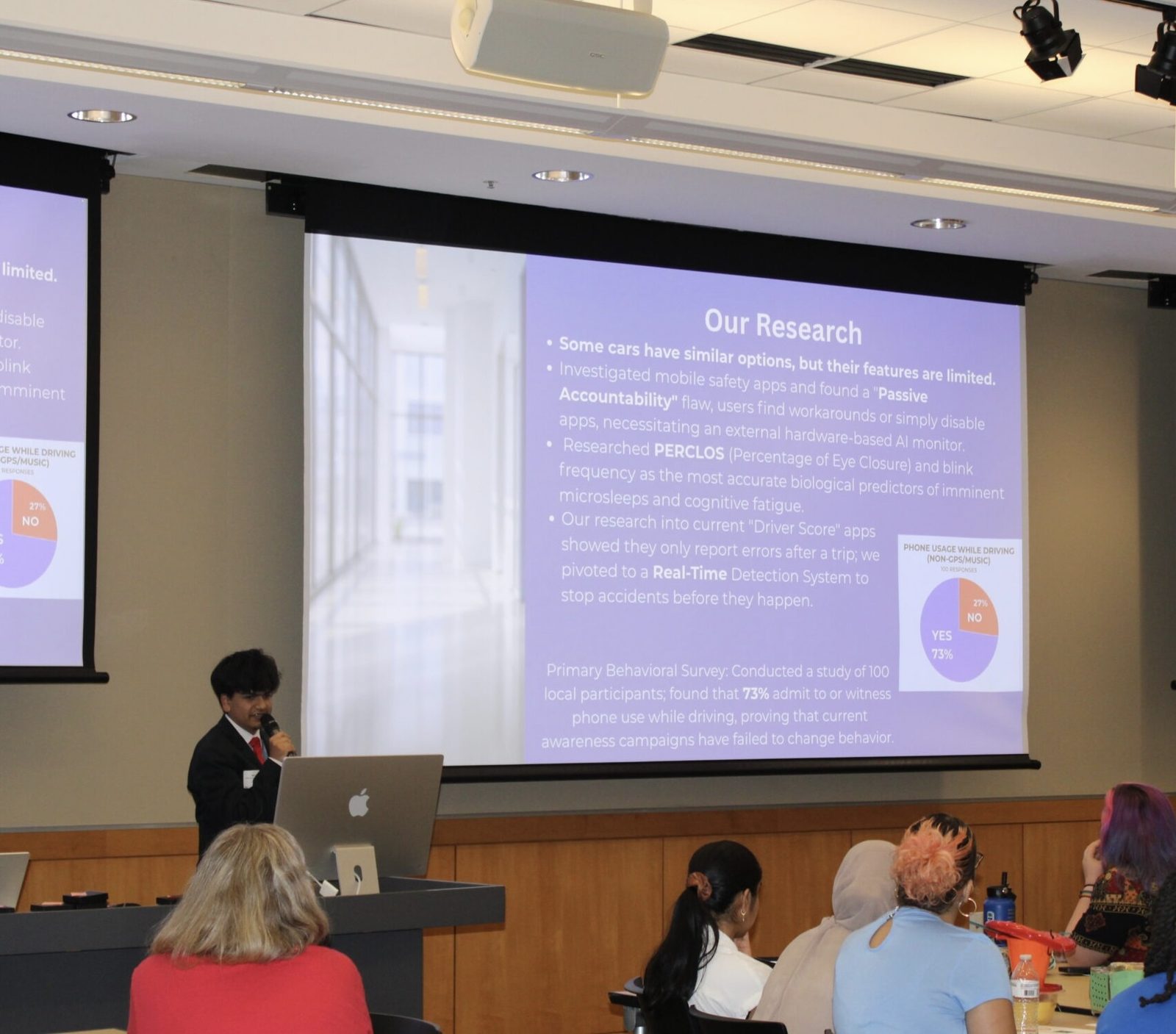
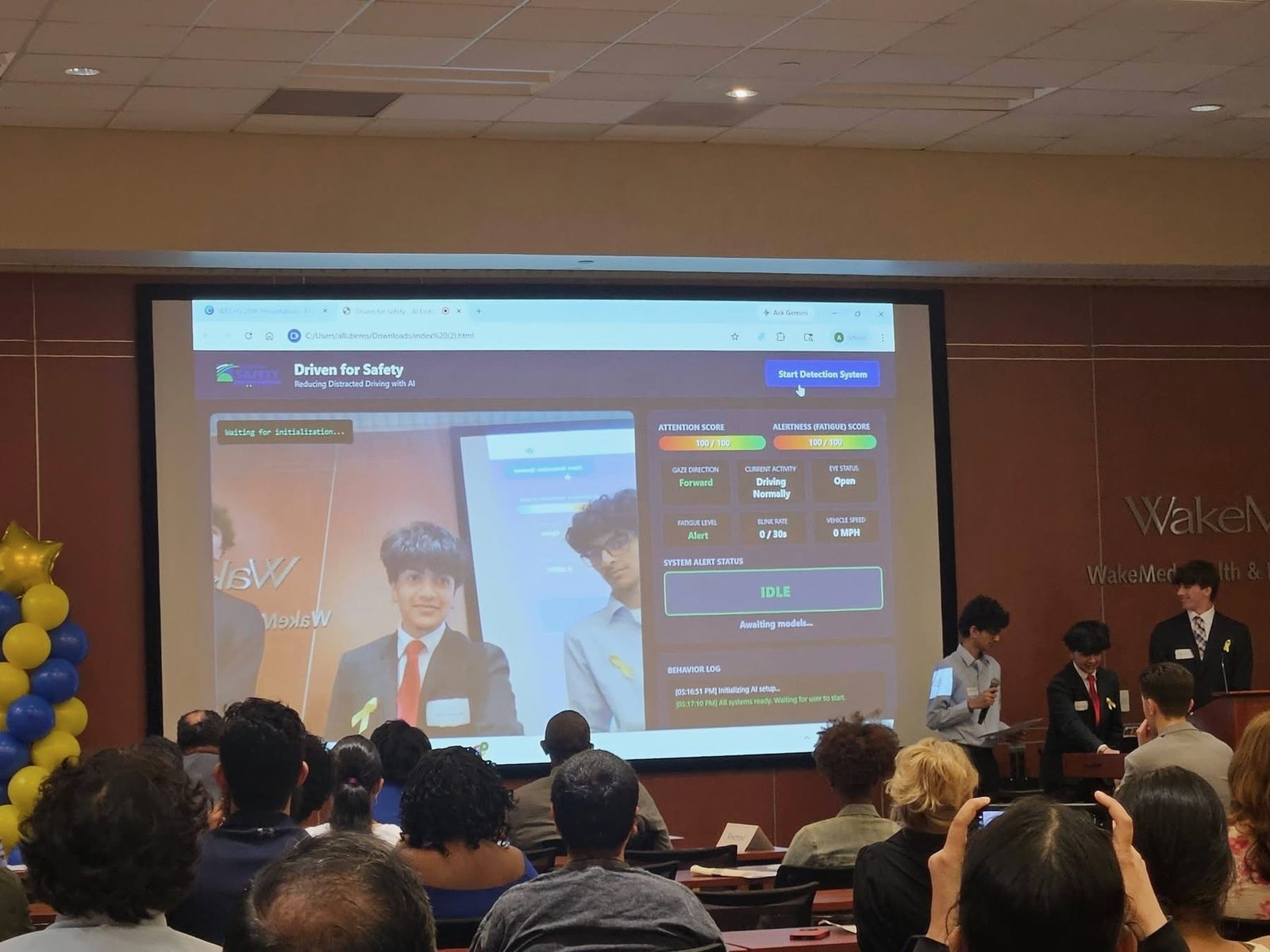
I also co-founded Driven for Safety with my teammates and best friends Ben and Samuel. We looked at how many car accidents happen simply because someone got distracted or drowsy behind the wheel, and we wanted to fix that without requiring expensive luxury cars. We built an AI driver monitoring system using computer vision to track gaze direction, hand proximity, and drowsiness in real time. That project ended up winning 1st place at the 2026 NC State Design and Pitch Competition, and our goal is to help everyday drivers, families, and fleets get home safely.
Alongside those, I run Project Ripple, a youth-led nonprofit where we bring students together for hands-on service and environmental cleanups, partnering with programs like Raleigh Stormwater's Adopt a Stream to keep our local waterways clean.
If someone wants to start a business, what advice would you give them?
My biggest piece of advice is simple: stop waiting until you feel "ready," and start building with what you have right now.
When you are young or starting from scratch with no money or connections, it is super easy to talk yourself out of starting because you think you need massive funding or every credential on paper before people will take you seriously. In reality, people respect genuine effort and working prototypes way more than a perfect pitch deck. Build a basic version of your idea, put it in front of real users or mentors, and learn fast from whatever breaks.
At the end of the day, slow motion is better than no motion. You do not need to have the whole staircase mapped out to take the first step. Just start, stay consistent, and let real-world feedback guide you.
What is one piece of feedback from a happy customer or client that you won't forget?
One moment I will never forget happened during a live demo and pitch of Driven for Safety. After watching our real-time gaze and distraction detection work right in front of them, a parent and educator came up to us and said that seeing the system in action immediately made them think of their teenager driving to school every morning.
Hearing someone look at code we wrote late at night and immediately connect it to keeping their own kid safe hit differently. Winning 1st place at NC State right after was an incredible feeling, too, because it validated that what we were building actually mattered. Moments like that remind me that tech is not about flashy buzzwords; it is about protecting real people and giving families peace of mind.
Where do you see your company in the future?
Over the next few years, I see Asteri-NeuroAI growing from a computational research platform into a trusted clinical decision-support tool used inside neurology departments and diagnostic imaging centers.
Right now, we are focused on sharpening our 3D-CNN architecture and multi-modal MRI and PET scan fusion so clinicians can catch subtle structural and metabolic signs of diseases like Alzheimer's years before standard visual reviews normally would. In the near term, I want to publish our validation benchmarks and partner with academic medical centers here in the Triangle to test the platform on larger, more diverse datasets.
Long term, my dream is for Asteri-NeuroAI to sit right inside everyday hospital workflows as a reliable second set of eyes for physicians, helping families get answers sooner and giving patients access to care when it can make the biggest difference.
What is the biggest misconception about your industry?
The biggest misconception about artificial intelligence, especially in healthcare and automotive safety, is that AI is here to replace human judgment.
People hear "AI" and assume it means taking doctors or drivers out of the equation. In reality, the best AI works like a high-speed co-pilot. Whether it is alerting a tired driver before they drift out of their lane or flagging a tiny anomaly on a brain scan for a doctor to review, the goal is to back humans up and catch blind spots, never to replace human care or intuition. Technology is at its best when it empowers people to make safer, faster decisions.
What has been one of your biggest struggles building your business, and how did you deal with it?
My journey has definitely not been a smooth road, and the struggles have been both personal and practical.
Emotionally, losing my grandfather to Alzheimer's while trying to channel that grief into building Asteri-NeuroAI was the hardest thing I have ever gone through. On the day-to-day side, teaching myself cloud development and machine learning while juggling high school, college courses at Wake Tech, clinical shadowing in the operating room, and leadership roles came with a massive learning curve. On top of that, being 17 in medical and tech spaces means you constantly have to work twice as hard just to prove your ideas belong in the room. Early on, trying to do everything myself led to multiple all-nighters and serious burnout.
I dealt with it by leaning on the people around me and getting much more intentional with my time. I started using strict time-blocking, breaking huge engineering goals into small weekly targets, and trusting my teammates with real ownership over their parts of the project. Whenever things feel overwhelming, I remind myself why I started—and that keeps me grounded.
Who was your favorite music artist and athlete growing up?
Growing up, my favorite music artist was Drake and my favorite athlete was Lionel Messi.
Drake was always playing in the background during late-night study sessions, gym workouts, and coding sprints. His focus on longevity and constantly raising his own bar always stuck with me. On the sports side, watching Messi play taught me that vision, consistency, and quiet discipline beat loud hype every single time. Seeing how he reads the entire field three steps ahead of everyone else is the exact mindset I try to bring into building technology and leading a team.
Any shoutouts you want to make?
I have so many people to thank, because none of this happens alone.
First, I want to give a massive shoutout to my entire family for instilling the values and work ethic I carry every day and for always having my back no matter what crazy project I decide to take on next. To my mom, Shallu, thank you for being my constant anchor, believing in me since day one, and always pushing me to chase my biggest ideas. To my dad, thank you for showing me what real sacrifice, discipline, and resilience look like every single day. To my siblings, Mridul and Dishita, thank you for keeping me grounded, keeping me laughing, and always being in my corner through the late nights and busy weeks. And to my grandma, Satya, thank you for your endless love, wisdom, and blessings; our family wouldn't be what it is without you.
I want to shout out my bus driver, Mr. Mike, for being there every single day and giving me someone real to talk to. We have conversations on that bus that I couldn't have with anyone else.
I also want to shout out my best friend, day one, gym buddy and neighbor, Saatwik. I love our long walks and biking around town, and I love going to the gym together.
Huge shoutout to my co-founders and best friends, Ben and Samuel. I honestly could not have started or brewed up these ideas without y'all. And Ben, thank you genuinely for all your wisdom and advice along the way.
My gratitude goes out to my greatest friend, James, for literally always being there no matter the time or place and for being my Brawl Stars partner.
My deepest appreciation also goes to my friend for life, Charan, who has seen me through every stage of life; playing Pokemon Emerald with him was always so much fun.
Huge shoutout to my neighbors and bus buddies Bidusi, Mahima, and Rutu. I genuinely wouldn't have survived the bus rides without y'all!
And a massive shoutout to my buddy and WECHS day one, Waleed—you always manage to put a smile on my face even on the days I don't feel like smiling. Thanks for everything, bro.
My gratitude also goes to my seminar and English teachers, Ms. Christensen and Ms. Wernersbach: our team wouldn't be where we are today without your mentoring.
And a huge shoutout to my math buddy, day one, and best friend Cole; you always keep me curious and on my tiptoes with your curiosity and always wanting to know the "why" behind everything. Love you, bro!
I also want to shout out my day one and Science Olympiad partner, Raj Dasari; you are sincerely the GOAT.
And a huge shoutout to my Science Olympiad coach, Dr. Colbert: thank you for always pushing us to think deeper, stay curious, and believe we could compete with anyone.
I also want to give a huge shoutout to the 1517 Fund for believing in young founders who build outside the traditional path and backing our early vision for Asteri-NeuroAI. Having people in your corner who bet on your curiosity and drive before you have a traditional degree means everything.
Finally, thank you to Business Stories Magazine for giving me the platform to share our story with the world.
Where can our readers learn more about you and your company?
Readers can check out our work at Asteri-NeuroAI.com, connect with me on LinkedIn under Maanvik Uppal to follow updates on Asteri-NeuroAI, Driven for Safety, and Project Ripple, or follow along on Instagram at @maanvik_uppal. If you are interested in research collaborations, partnerships, or volunteer opportunities, feel free to reach out directly via email at umaanvik@gmail.com!