Founder Interview
Mike Riddle
Build the thing you actually know, not the thing that looks like an opportunity.
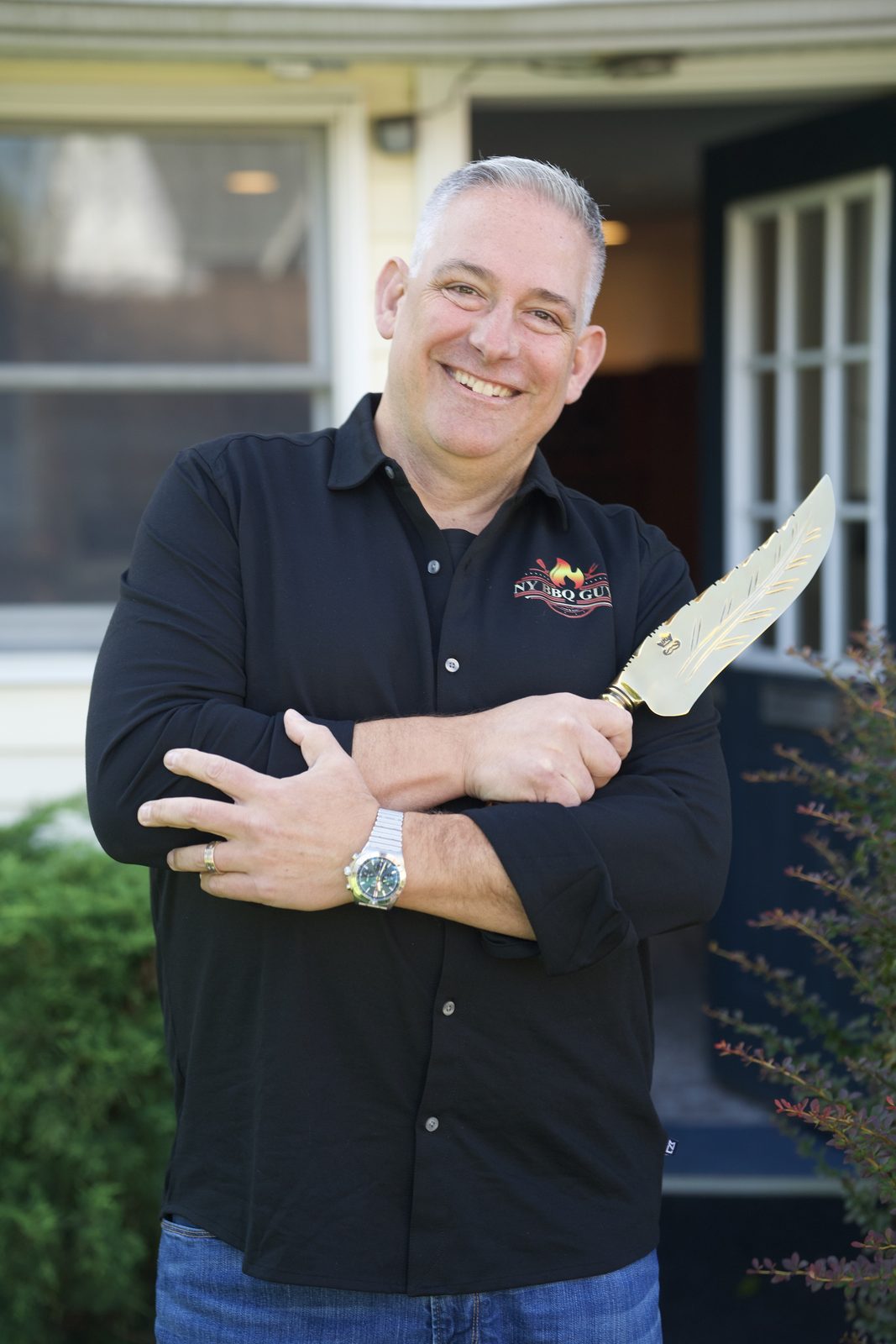
So nice to meet you! First off, what’s your name? Tell our readers a bit about yourself: where you’re from originally and where you live now.
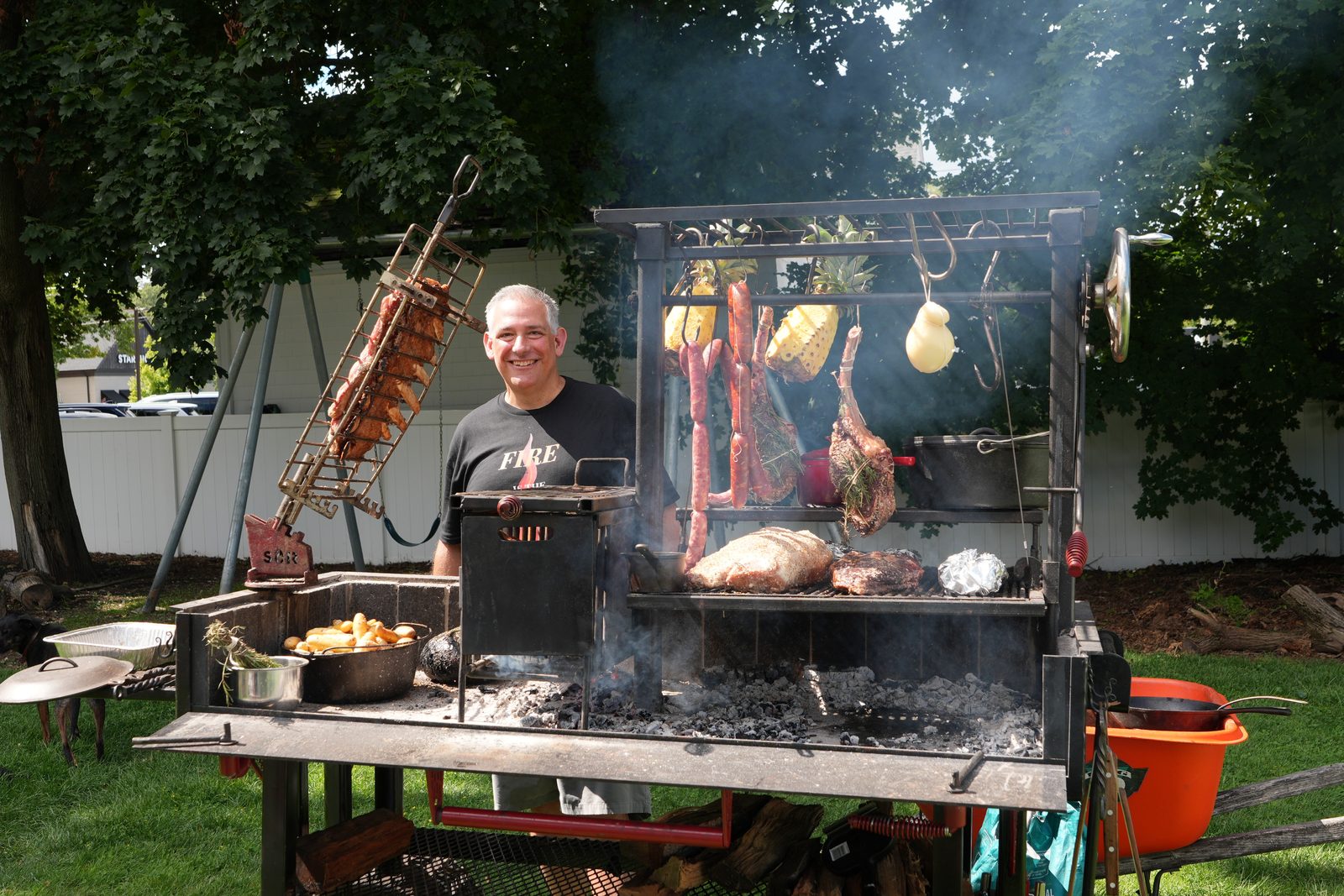
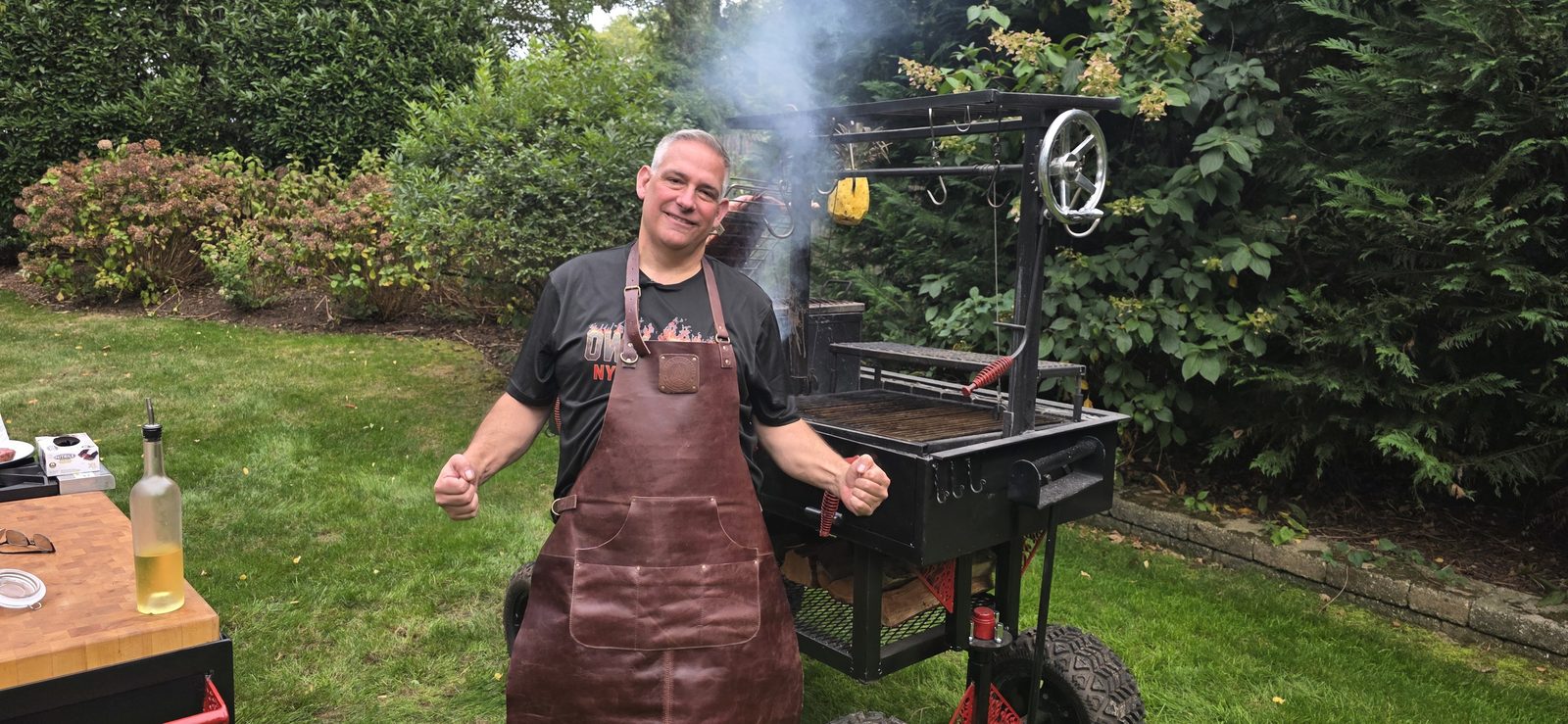
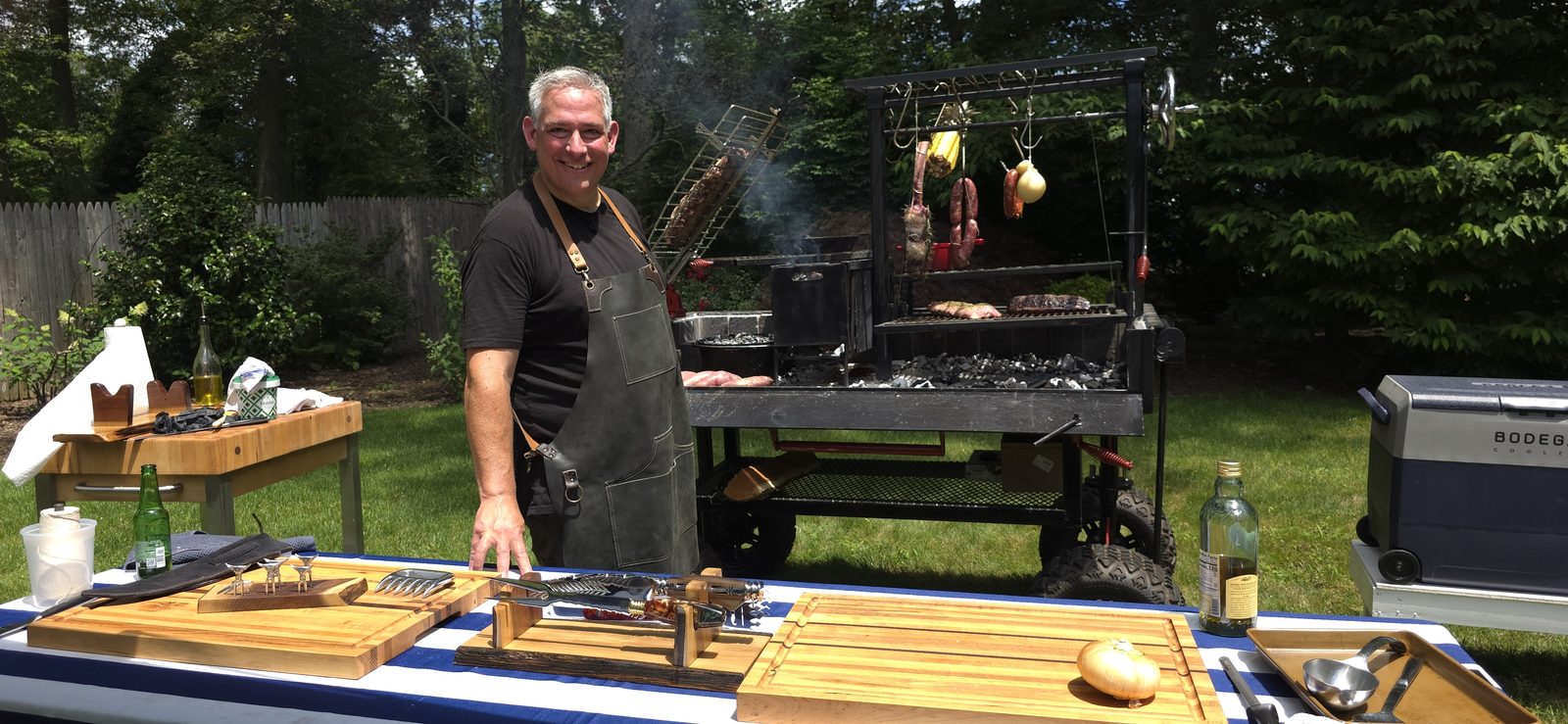
My name is Mike Riddle, and I'm the founder of Own The Fire®, a Long Island live-fire cooking and custom grill fabrication company.
I'm a New Yorker, born and raised, and I've spent most of my life on Long Island. My background is really two careers that ran on separate tracks for a long time. The first was the kitchen. More than twenty years in professional restaurants, starting as a dishwasher and working my way up to Executive Chef. That's where I learned fire, discipline, and how to hold a standard under pressure. The second was corporate. Two decades in marketing, sales, and business development, helping companies build their brands and grow.
For most of my life, those two things had nothing to do with each other. The chef and the marketer were different people who happened to share a name.
Own The Fire is what happened when I stopped keeping them apart. Today I design and hand-build heavy-duty Santa Maria grills and smokers, cook and teach live-fire technique, and create content built around fire management, asado, and the craft of cooking over wood and coals. Content that's reached millions of people who want to actually understand fire, not just follow a recipe.
What started as a return to something I'd always loved has become a company that runs on all of it at once. The chef who knows the craft. The marketer who knows how to build a brand. The fabricator who works in steel. Own The Fire brings all three together.
Tell us one thing you love about where you live now.
The seasons. Long Island gives you all four, and every one of them changes how you cook over fire.
There’s something about cooking outside through a real winter that you don’t get somewhere warm. Standing over a live fire when it’s cold out, with the smoke hanging in the air, that’s when it feels most like the thing I love.
But it’s the range I appreciate most. Spring for those first cooks outside. Summer for the long ones with people gathered around. Fall for low and slow. Winter when the fire itself becomes part of the experience. The fire means something different in every season, and living somewhere that gives me all four keeps the craft from ever getting stale.
And I’m close enough to New York City that I’ve never lost the food culture that shaped me, but far enough out to have the space to build and cook the way I want to.
Tell us a little more about what your company does and how it started. How does it help your customers?
Own The Fire does two things that feed each other. I design and hand-build custom Santa Maria grills and smokers, and I teach people how to cook on them. The steel and the education are one business, not two.
It started as a return to fire. After more than twenty years in professional kitchens and two decades in corporate marketing, I came back to live-fire cooking as the thing I actually loved. I started sharing what I knew online, the technique, the fire management, the why behind it, and that content started reaching millions of people. There was clearly an audience for cooking over wood and coals at a serious level, explained by someone who had actually done it for a living. That audience is what told me there was a company here, not just a hobby.
Where it helps customers is confidence. Most people are intimidated by live fire. They’ve been told it’s unpredictable, that you need years to get good, that a great cook over coals is something only a professional can pull off. I teach the opposite. Fire has rules. Once you understand how heat actually behaves, you stop guessing and start cooking with intention. That shift, from intimidated to in control, is the thing I’m actually selling, whether someone finds it through a video or buys a grill built to make that control easier.
And the grills are built to earn that trust. Heavy-duty steel, fabricated by hand, made to last for decades and cook better the more you use them. A customer isn’t buying a product that gets replaced in three years. They’re buying the last grill they’ll need, from someone who cooks on the same equipment he builds.
If someone wants to start a business, what advice would you give them?
Build the thing you actually know, not the thing that looks like an opportunity.
I had two careers before this one. Twenty years cooking and twenty in marketing. Own The Fire works because it sits on top of both. I’m not guessing at the craft, and I’m not guessing at how to reach people. When I tell someone how a grill should be built or how to run a fire, it comes from having done it, not from having researched it. That’s the moat. Someone can spend more money or work more hours, but they can’t shortcut twenty years of doing the actual work.
So my advice is to find the place where what you genuinely know overlaps with something people want, and build there. It’s slower than chasing whatever’s hot, but it’s the kind of foundation that holds up when things get hard. And they always get hard.
The second piece is that expertise isn’t a business by itself. I know plenty of people who are better cooks than me who will never build a company, because knowing the craft and building a business are two different skills. You have to be willing to learn the second one. For me, that meant learning to tell a story on camera, build a brand, and actually sell. If you’re the expert, you either learn the business side or you partner with someone who has it. Being the most talented person in the room doesn’t matter if nobody knows you exist.
And start before you feel ready. I could have spent another two years refining grills in my shop before I ever showed anyone. Instead, I put the work out and let the response tell me what to build next.
The market teaches you faster than your own head does.
What is one piece of feedback from a happy customer or client that you won't forget?
I delivered an SM60 to a customer named Joe recently, and his reaction is the kind that stays with you. He was genuinely amazed by it.
What gets me about that isn’t the compliment. It’s what he was reacting to. This is a heavy build: quarter-inch American plate, a firebrick-lined chamber, solid steel grates, a real piece of equipment. When someone sees it in person, puts a fire in it, and starts cooking, there’s a moment when it clicks that this isn’t just another backyard grill. It’s built to be run hard and kept for decades.
Watching that land with Joe, seeing him realize what he actually had, that’s the kind of feedback I don’t forget.
Anyone can be happy with something the day it shows up. What matters to me is that a year from now, Joe is still cooking on that grill, still finding new things it can do, and it’s better than the day I delivered it.
That’s what I build for. Not the reaction on delivery day. The thousand cooks after it.
Where do you see your company in the future?
I want Own The Fire to be the name people trust when they’re serious about live fire. Not the biggest. The most trusted. There’s a difference, and that difference is the whole strategy.
On the build side, the custom work keeps growing and the requests keep getting more ambitious. People come to me for equipment they can’t get anywhere else, built around exactly how they cook. Larger formats, integrated smokers, one-of-a-kind builds most shops won’t take on. That’s where the craft lives and where I do my best work. I want to grow that without ever turning it into mass production. The moment a grill stops being built by someone who actually cooks on it, the company stops being what it is.
But I don’t want Own The Fire reachable only by someone who can commission a custom build. The larger mission is education. The content, the technique, the recipe work, all of it exists to make live fire less intimidating for people who will never buy a thing from me. If Own The Fire is the reason a wave of people stopped being afraid of their fire and started cooking with intention, that’s a bigger legacy than any product line.
So the future is both. Build the best equipment I can for the people who want it. Earn that same trust as a teacher of the craft for everyone else. Do those two things well enough for long enough, and the rest takes care of itself.
I’m building this to last. Same as the grills.
What is the biggest misconception about your industry?
The biggest misconception is that live-fire cooking is uncontrolled.
People look at a wood fire and see unpredictability. No thermostat, no digital controller, no button to turn the heat up or down. So they assume cooking over fire is less precise than cooking on modern equipment. It’s the opposite.
Fire gives you an enormous amount of control. The difference is that the controls are physical. The size and maturity of the coal bed, the wood you use, airflow, the distance between food and fire, where you place it and when you move it, how you build separate heat zones. Those are your dials. You’re not giving up precision. You’re taking responsibility for it.
The same misconception shows up in how people see the equipment. They think a live-fire grill is a steel box with a grate over it. It isn’t. Geometry, airflow, the distance from coal bed to cooking surface, how the grate moves, heat retention, the materials, all of it changes how much control the cook actually has. A well-designed grill isn’t heavier for the sake of it. It’s built to give you command over every one of those variables.
That’s what I teach with Own The Fire. Live fire isn’t throwing meat over flames and hoping. It’s technique and physics, and it’s a craft you build by learning to read what the fire is doing.
The fire was never unpredictable. You just have to learn its language.
What has been one of your biggest struggles building your business, and how did you deal with it?
The hardest part has been being every department at once.
Own The Fire is built on the fact that one person does all of it. I design the equipment, I fabricate it, I cook on it, I film it, I write it, I sell it. That’s the whole value. The chef and the builder and the marketer are the same person, so nothing gets lost in translation.
It’s also the single biggest constraint on the business. There are only so many hours, and every one of them is a choice between building a grill, making content, or answering a customer. Time spent on any one of those is time the other two don’t get.
Early on, I tried to do everything at full effort at the same time, and the result was that everything moved slowly and I burned out doing it. What fixed it wasn’t working harder. It was getting honest about sequence. I stopped treating all the work as equally urgent and started running the business in focused blocks. Build when it’s time to build. Create when it’s time to create. Stop pretending I can do all of it in the same afternoon and do none of it well.
The other half was learning what only I can do versus what I was doing out of habit. The fabrication and the teaching are me. Nobody else can be the cook who builds the grill. But plenty of the rest doesn’t have to run through my hands. Growth depends on being ruthless about which is which.
I’m still working on it. I think that’s part of building something around your own expertise: eventually you have to learn the difference between protecting what makes the company yours and simply refusing to let go.
What was your favorite music artist and athlete growing up?
Pink Floyd, easily. Still is. There’s a craftsmanship to what they created that I’ve always appreciated. Those records were made to be experienced as a whole, not just as a collection of singles. The music could be huge and complex, but nothing felt accidental.
The athlete question I’ll answer honestly. I was never really a sports guy. While other kids were following teams and players, I was working in kitchens. I started young, and restaurants were where I spent a lot of my time, so the people I looked up to were chefs and the people I worked alongside, not athletes.
The discipline other people may have learned through sports, showing up, doing the reps, earning your spot, being accountable to the people around you, I learned on a kitchen line instead.
Any shoutouts you want to make?
The people who follow the work. Own The Fire grew because a community of people who care about live fire showed up, asked hard questions, tried the techniques, and pushed me to be better at explaining them. The company exists because they engaged with it. That’s not a small thing, and I don’t treat it like one.
Beyond that, the makers and cooks in this space who do it honestly, who build real things and teach without gatekeeping. I have a lot of respect for the people who are in it for the craft and who are willing to share what they’ve learned.
Where can our readers learn more about you and your company?
Everything lives at www.ownthefire.com. That's the grills, the custom builds, the recipes, and The Chef's Notebook.
For the cooking and the fire itself, the content is the best way in:
Website: www.ownthefire.com
YouTube: @weownthefire
Instagram: @weownthefire
Facebook: /weownthefire
If you want to understand how I think about live fire, start with the videos. If you want something built, start with the site.