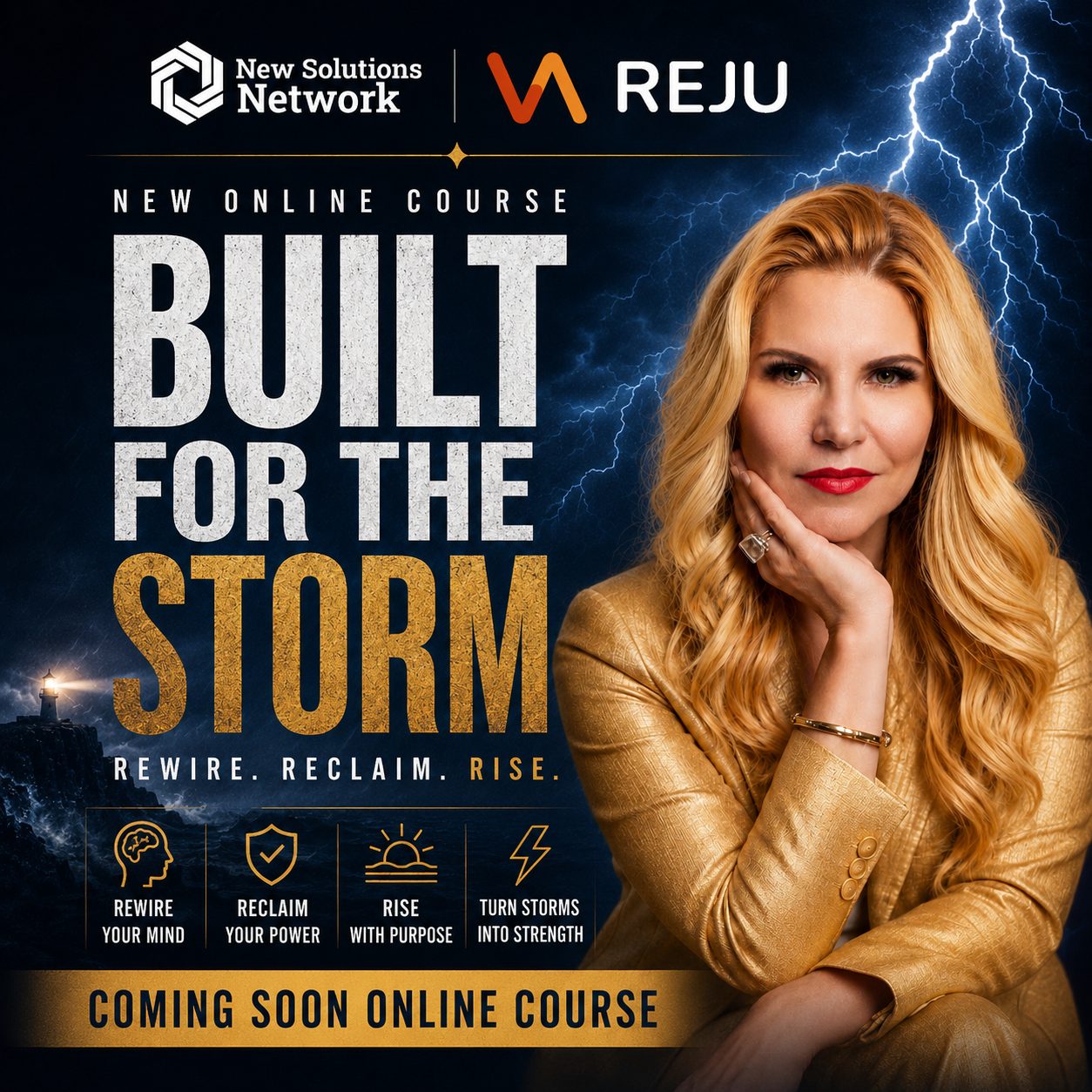
Founder Interview
Natanya Wachtel
I'm a little wary of giving advice, because most of what worked for me came from getting it wrong first. But something I've noticed again and again is this: the business will only…
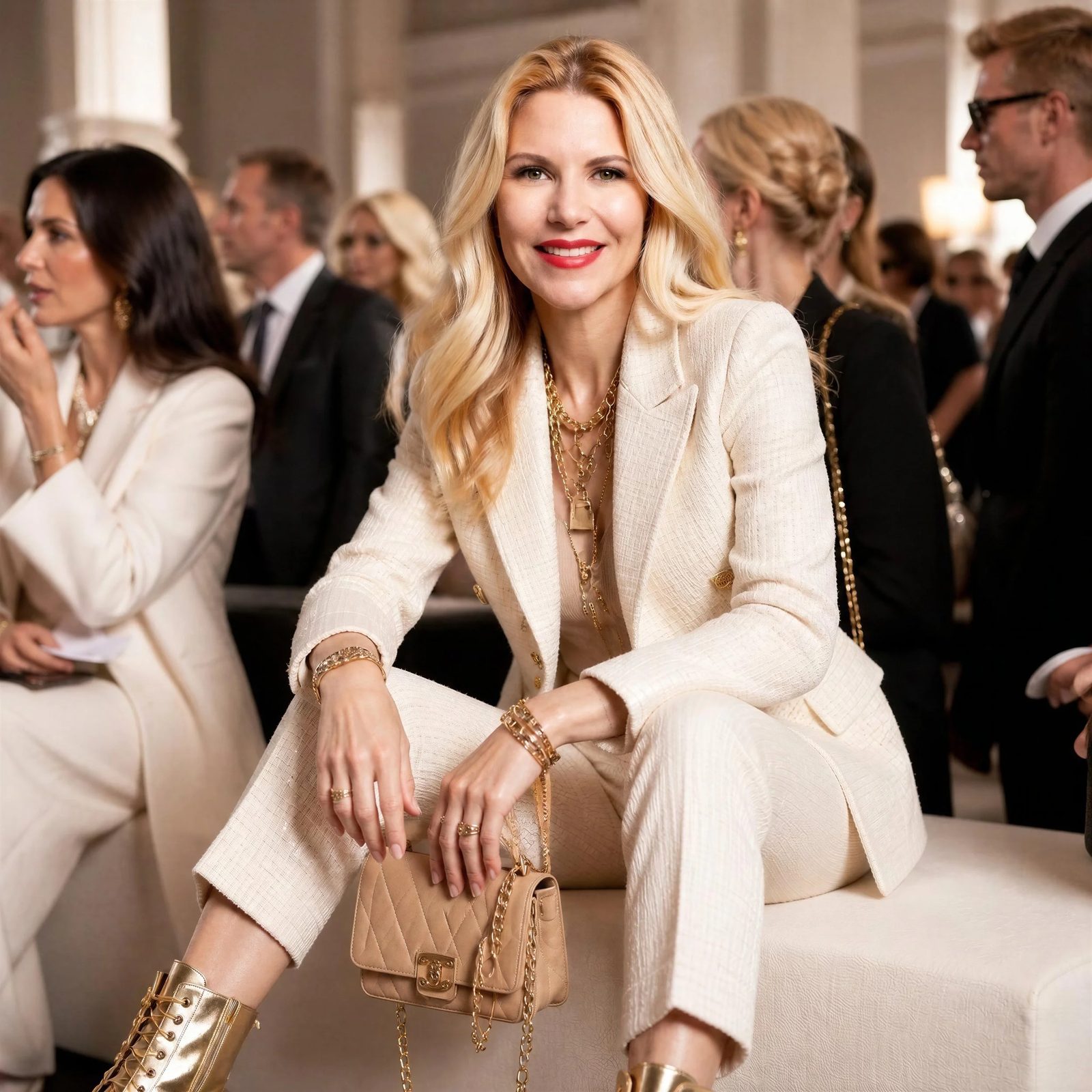
So nice to meet you! First off, what’s your name? Tell our readers a bit about yourself: where you’re from originally and where you live now.
I'm Natanya Wachtel—behavioral scientist, founder, and chief strategy officer of New Solutions Network. I grew up traveling the globe with my family, touching down stateside mostly in New Jersey. I was a kid who read too fast and asked too many questions, and I somehow turned that into a company that spans media, wellness, publishing, and live experiences. These days, I'm based in a wooded suburb outside Manhattan, raising five kids and running a network of companies out of the same nervous system, which is exactly as chaotic as it sounds. In my experience, people meet me and try to file me under one thing—unofficial therapist, behavioral-science-powered marketer, media person—and I've mostly stopped correcting them. I'm usually all of it by Tuesday.
What's one thing you love about where you live now?
This is where I get a little biased. New Jersey might be the most misread place in the country, which is probably why I love it—I know what it's like to be filed under one thing. Everyone thinks they've got us: the Housewives, the Turnpike, a punchline between two airports. Where I really live looks nothing like that show—and half those women are secretly from Staten Island anyway.
The real Jersey is a culture box. Every kind of person, every political viewpoint, every religion, a different restaurant and a different accent every few exits. We've got our own cities, more parks than we get credit for—they don't call it the Garden State for nothing—and, yes, the Statue of Liberty is technically ours. It's a whole world pretending to be a stopover. I relate to that.
Tell us a little bit more about what your company does and how it started. How does it help your customers?
New Solutions Network is a company made of companies—enterprise, wellness, media, and a public-benefit arm—disciplines that almost never build together, all running on one engine: behavioral science + human flourishing. Which is really the study of the distance between what people say and what's true, and why we get stuck there.
It started back in 2008 with one stubborn idea I couldn't shake: interested and changed are not the same thing. I kept watching companies burn millions on products and programs built for how people were supposed to behave—and real people, in my experience, never got the memo. So we went to work in that gap, the unglamorous part where things actually move. Then life caught fire, more than once, and I rebuilt every time. One company quietly became a network of them.
The part I care about most sits underneath all of it: the ethics are written into the legal bones. We're built as a public-benefit company, so the same tools we sell to people who can pay go free to the people who can't, funded by the premium work. The morality lives in the human community, not in some model left to set its own parameters.
No predatory playbook—no trauma as content, no performance of pain, no extracting from the people who can least afford it. Harvard to the hood, the boardroom and the block. What we're really doing, whether it's with a Fortune 500 company or a kid in a school program, is helping people become the version of themselves they'd have been if the world had been a little kinder to their wiring.
I happen to believe the next civilization gets built by the people willing to collaborate instead of compete. When it works, you can feel it. And people stay.
If someone wants to start a business, what advice will help them?
I'm a little wary of giving advice, because most of what worked for me came from getting it wrong first. But something I've noticed again and again is this: the business will only ever be as regulated as you are.
If you build from panic, you'll make panicked decisions and call them strategy—I've done it more than once. One thing that's saved me is a rule I almost hate because it's so simple: if I have to betray my own nervous system to say yes, it's a no. It's slower than most of the advice you'll get online. It's also the reason I'm still standing.
What's one piece of feedback from a happy customer or client that you won't forget?
The feedback that stays with me almost never arrives as a testimonial. It comes at 2 a.m. from someone who wasn't supposed to make it.
I do a lot of work with first responders and people the industry wrote off, and every so often one of them writes to say that something we made—a show, a tool, a conversation—was part of why they were still here to send the message at all. I've gotten a version of that more than once, and it never lands softly.
People hand us the truth they hide from everyone else, and you don't frame that on a wall. You just carry it, quietly, into the next thing you build.
Where do you see your company in the future?
I try not to hold the future too tightly, because every time I've drawn a neat five-year plan, life has laughed and redrawn it for me. But the direction is clear, and it's less about scale for its own sake than reach with a conscience.
I want the same tools we build for Fortune 500 companies and professional athletes running, for free, in schools and in the communities the industry wrote off—carried by grants, our UN work, and sites we're standing up from Kenya to the Dominican Republic.
I want AI that keeps its soul, where the morality lives in the human community and not in some model left to babysit itself. And I want the research underneath all of it: peer-reviewed proof that investing in people makes them healthier and helps them live longer, the kind funders and health ministries can act on.
Underneath everything, the work stays what it's always been: who someone had to become to survive, and whether that version still serves them. I'd like to build something that outlasts me and keeps working in rooms I'll never walk into. We're not there yet. That's sort of the point.
What is the biggest misconception about your industry?
That behavioral science is a polite word for manipulation—that we're all in some back room engineering ways to trick people into buying things they don't need.
In my experience, it runs the other way. When you truly understand why people do what they do, manipulation stops being tempting because it has a short shelf life, and people can smell it now.
What lasts is helping someone close the distance between what they say they want and what they do—which mostly looks like paying attention, telling the truth, and building things that move people, not just products. The science isn't the cold part. Used right, it's the most human tool I've got.
What has been one of your biggest struggles building your business and how did you deal with it?
My own body and brain—and my own stubborn refusal to let them slow me down.
I've been the patient more times than I can count: multiple near-death experiences, more than one traumatic brain injury, paralysis, and relearning how to walk from zero. The most recent one nearly killed me in front of thousands of people at, of all places, a wellness event.
These aren't things I bounced off of. Each one took something and handed back a slightly different version of me. For years, I treated rest like a character flaw and productivity like proof I deserved to exist, so I'd fight my way back online and immediately overload the same system that had just failed.
What I've had to learn, slowly and badly, is that a company built by someone running on fumes just becomes a more expensive version of the fumes.
So I rebuilt the business the way I had to rebuild myself—from the nervous system out, with the same thing we offer everyone else: no predatory playbook, no performing a wellness I wasn't living. I'm still practicing. I'll let you know how it goes.
Who was your favorite music artist and athlete growing up?
I've never had just one, and at this point I think that's the whole tell.
Growing up, I was deep into hip-hop—Salt-N-Pepa, Queen Latifah—but also Madonna, dancehall, Latin music, and the African drumming I picked up while living overseas. I like almost every style, and the blends most of all. (Country is the one I'm still working on. I'm open-minded; it's a process.)
When Run-DMC and Aerosmith dropped "Walk This Way," it broke my brain in the best way—two worlds that weren't supposed to touch, suddenly making something bigger than either one. That collision has basically been my whole life's work.
Athletes? Same story—no single star. As a kid, I swam, dove, danced, skated, and played soccer, so I respect all of it. It's part of why one of our shows is #GameMindset and another is Psych + Hip Hop. I've never been a one-thing person. I just finally stopped apologizing for it.
Any shoutouts you want to make?
My team, always—they're the reason any of this stands.
Frank Saia, our CEO, who was my boss on several occasions and is now one of the people I trust most in the world. Ryan Castle, our chief science officer, who keeps us honest with the research. Abdul Tubman, who runs our education and nonprofit work. Grace Trudeau, my chief of staff and the reason I can leave the house. Jim Ciolek, Julie Rebels, Ryan Verneuille, Ian Jones, Casey Abbott, Akhil Rajan, and Dwayne Seay—the people who keep the whole machine running while I'm off having ideas at 2 a.m.
My family, my kids, and my friends—my mirror and my toughest focus group.
And the people who write to me from firehouses, back rooms, and hospital beds—you're the reason any of this exists. If you've ever felt like the room wasn't built for you, this whole thing is a little bit for you.
Where can our readers learn more about you and your company?
NewSolutionsNetwork.com is the front door to the whole ecosystem—the divisions, the shows, the team, all of it.
You can watch on YouTube and listen on Spotify, from Organized Minds to Psych + Hip Hop to #GameMindset, catch my writing at Fast Company and Psychology Today, and find me around the internet under my name, Natanya Wachtel.
Come find me—I mean that. Some of my favorite work has started with a stranger's message.